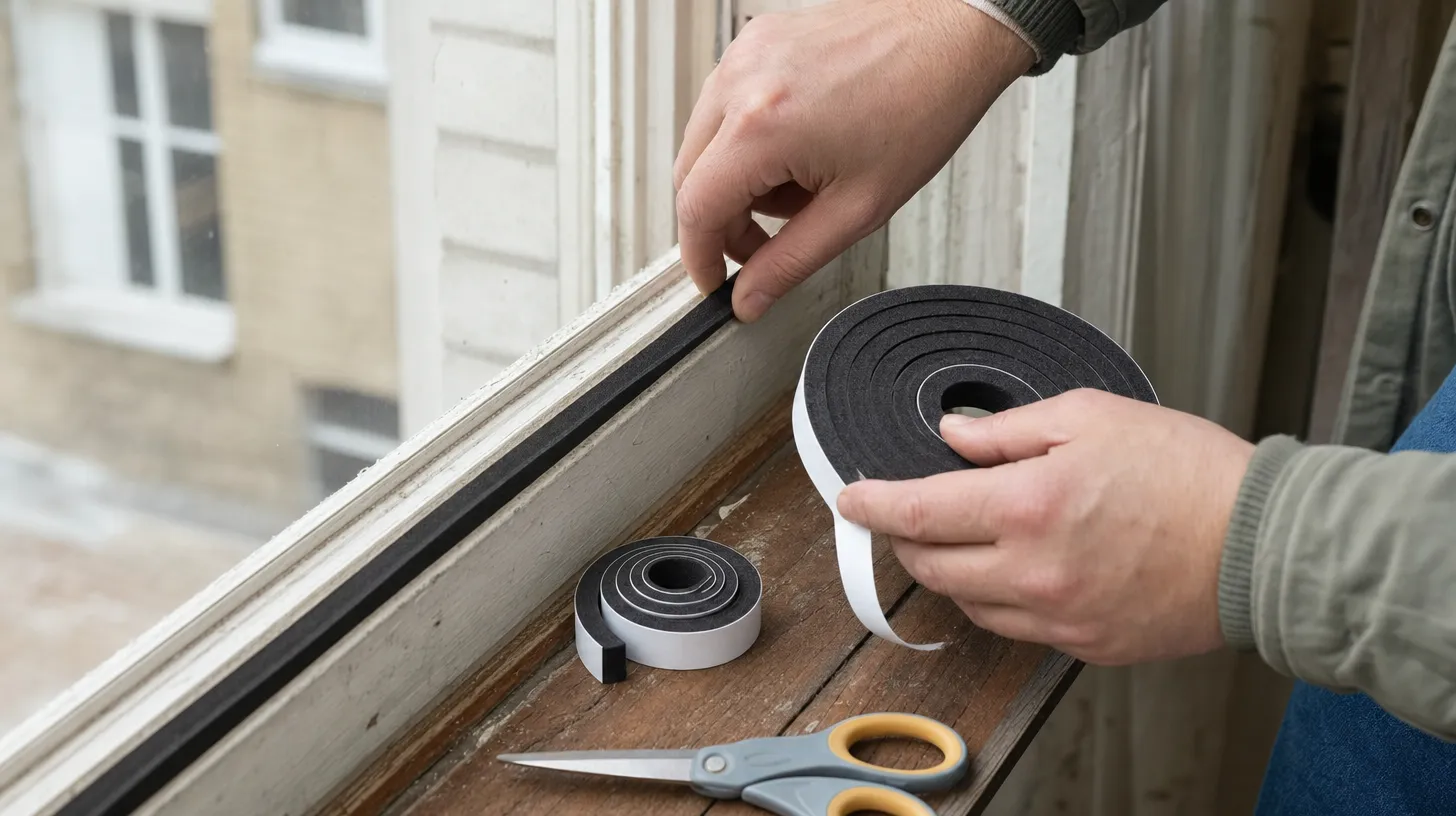
The best weatherstripping to block street noise is not a brand. It is a shape. Quarter-inch foam tape belongs on the compression faces of a sash, a thinner rubber foam where the window barely clears, a tapered wedge on a gap that changes width, and V-strip in the sliding channels. Match the profile to the gap and almost any decent tape works.
Get it backwards and you make things worse. Quarter-inch foam on a tight sash stops the window latching, which leaves the sash resting against a squashed strip and sealing worse than it did bare. Wrong shape beats wrong brand as a failure mode, every time.
So this is a gap-first guide, not a ranked list of brands: find the gaps, measure them, learn the five profiles, then buy. For the wider context, start with our guide to soundproofing apartment windows, then come back here for the sealing step.
Why sealing beats everything else per dollar
Sound and air take the same route. If air can get from the street into your bedroom, so can traffic noise, and it arrives without losing anything to the glass on the way. That is why a $7 roll of tape sometimes outperforms a $60 curtain.
The relationship is brutally non-linear. According to BuildCorp Direct, a gap as small as 1% of a wall surface can allow up to 50% of sound to pass through. Second Skin Audio puts the same point in measurable terms, as a table of ceilings: a surface left 1% open tops out at 20 dB of transmission loss, 2% open at 17 dB, and 5% open at 13 dB. The company writes that "just a 5% opening will change a wall from stopping 40 dB to only stopping 13 dB."
Read that as a ceiling, not a penalty. No amount of mass you add later beats the number your leaks set. For scale, Second Skin Audio's rule of thumb is that +10 dB doubles a sound's perceived loudness. And the target is not silence: according to the European Environment Agency, the WHO recommends that noise from road traffic "should not exceed 53dB during the day-evening-night period and 45dB during the night to avoid adverse consequences on health." You are getting a bedroom under a threshold, not building a studio. Our roundup of free soundproofing calculators is a decent place to sanity-check what any of it should be worth.
How to find the gaps in your window
Do this before you buy anything. Fifteen minutes, and it decides which profile you need.
The light test. ENERGY STAR's DIY inspection guidance is blunt: "For windows and doors, look to see if light shines through the edges where it should be sealed shut. Where you see light shine through, there is an air leak." Do it at night, room dark, a bright flashlight held outside the closed window.
The paper test. Also from ENERGY STAR: "Simply shut a door or window on a piece of paper. If you can pull the paper out without tearing it, you have a leak and you are losing energy." Try four or five points along the sash, because a warped window grips in the middle and gapes at the ends.
The smoke test. For leaks light will not show, Constellation's air-leak guide gives the sequence: "Choose a windy day to get the best result," "Turn off all combustion appliances and exhaust fans," "Shut all your windows and doors and close any fireplace flues," "Light incense to create a smoke stream," then "Hold the incense up to potential window and door air leaks or drafts, and wait to see if the smoke changes direction." Where the stream bends, you have a path.
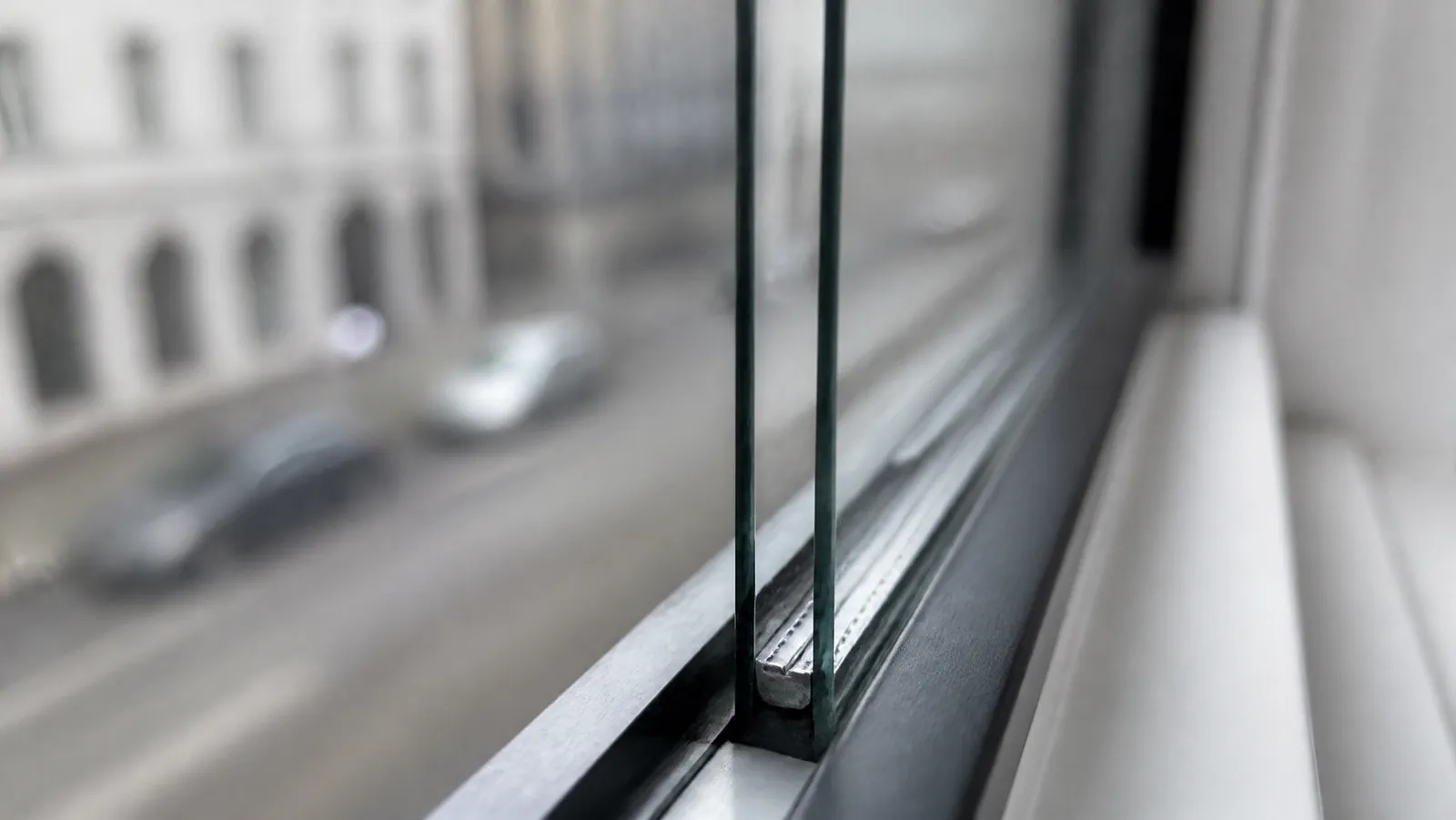
On a double-hung, check five places:
- The meeting rail, where the two sashes overlap. The most common leak, and the loudest.
- Both side channels, where the sash slides. Usually the widest gap, and the one foam tape cannot fix.
- The sill, under the bottom sash.
- The head, at the top of the upper sash, which people forget because they never look up.
- The frame-to-wall joint, outside the window entirely. That is caulk or tape territory, not weatherstripping.
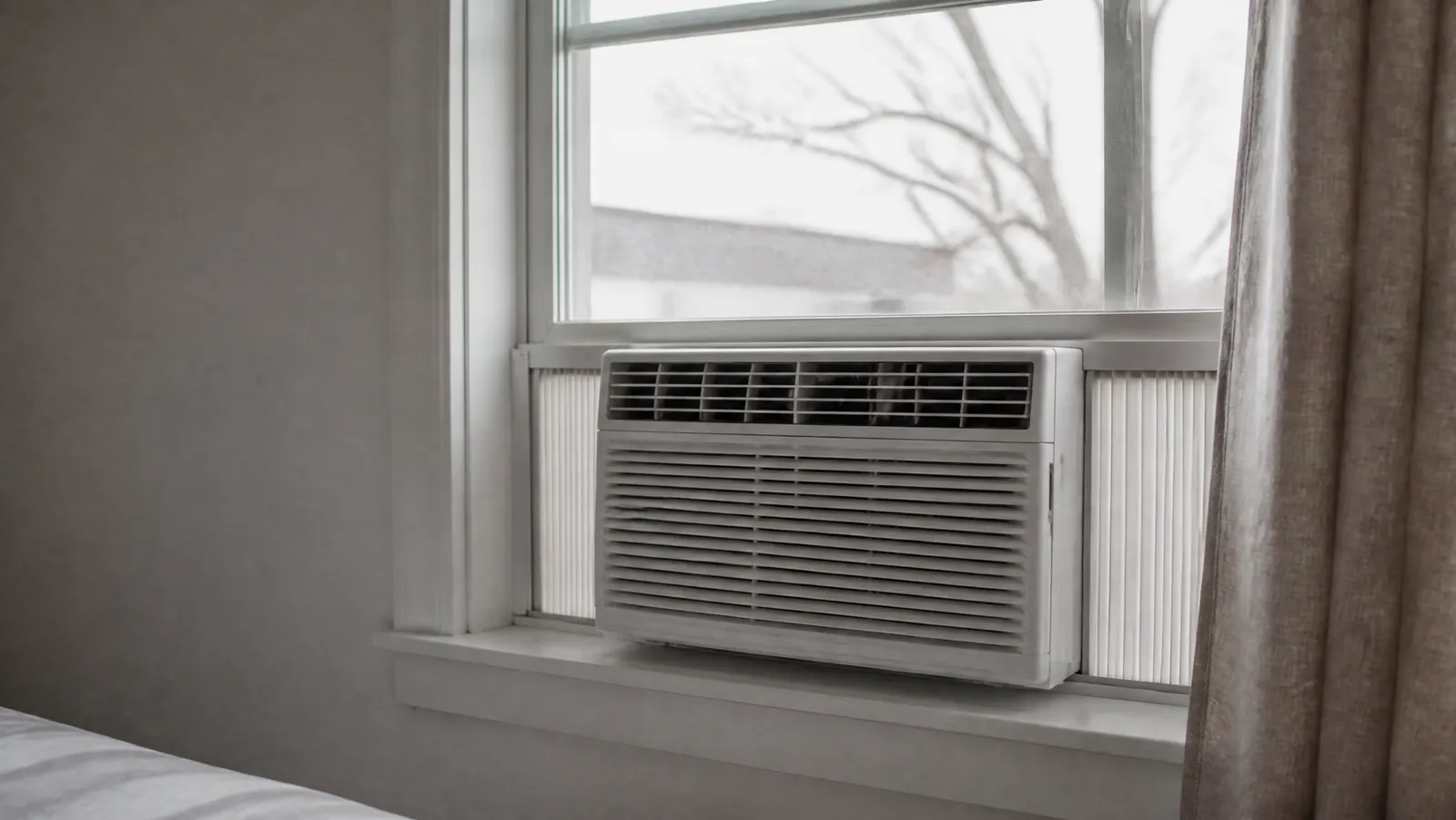
If the noise arrives through a through-wall unit instead, that is a different job with different materials, and worth reading up on sealing around a window air conditioner first.
How to measure a gap, and why you measure it three times
Close the window, then slide a stack of business cards into the gap until it stops. Standard business card stock is 14pt to 16pt, which print suppliers define as 0.014 to 0.016 inch per card, so a stack of ten measures roughly 0.15 inch — closer to an eighth of an inch than a tenth. Count the cards, then do that arithmetic. A feeler gauge is better. A tape measure is useless here.
Measure at the top, middle and bottom of every run. Old apartment sashes are rarely parallel to their frames. An eighth of an inch at the top and three eighths at the bottom is not unusual in a hundred-year-old building, and that one fact decides your purchase: it rules out uniform foam tape and rules in a wedge.
Then respect the constraint that governs everything. The U.S. Department of Energy's guidance is that weatherstripping in a window sash "must accommodate the sliding of panes — up and down, sideways, or out," and that "the weatherstripping you choose should seal well when the door or window is closed but allow it to open freely." DOE also says to choose a type "that will withstand the friction, weather, temperature changes, and wear and tear associated with its location." A seal you have to fight to close is a seal that will not stay closed.
Window weather stripping for soundproofing, profile by profile
Five shapes cover essentially every rental window. This is the section that saves you a return.
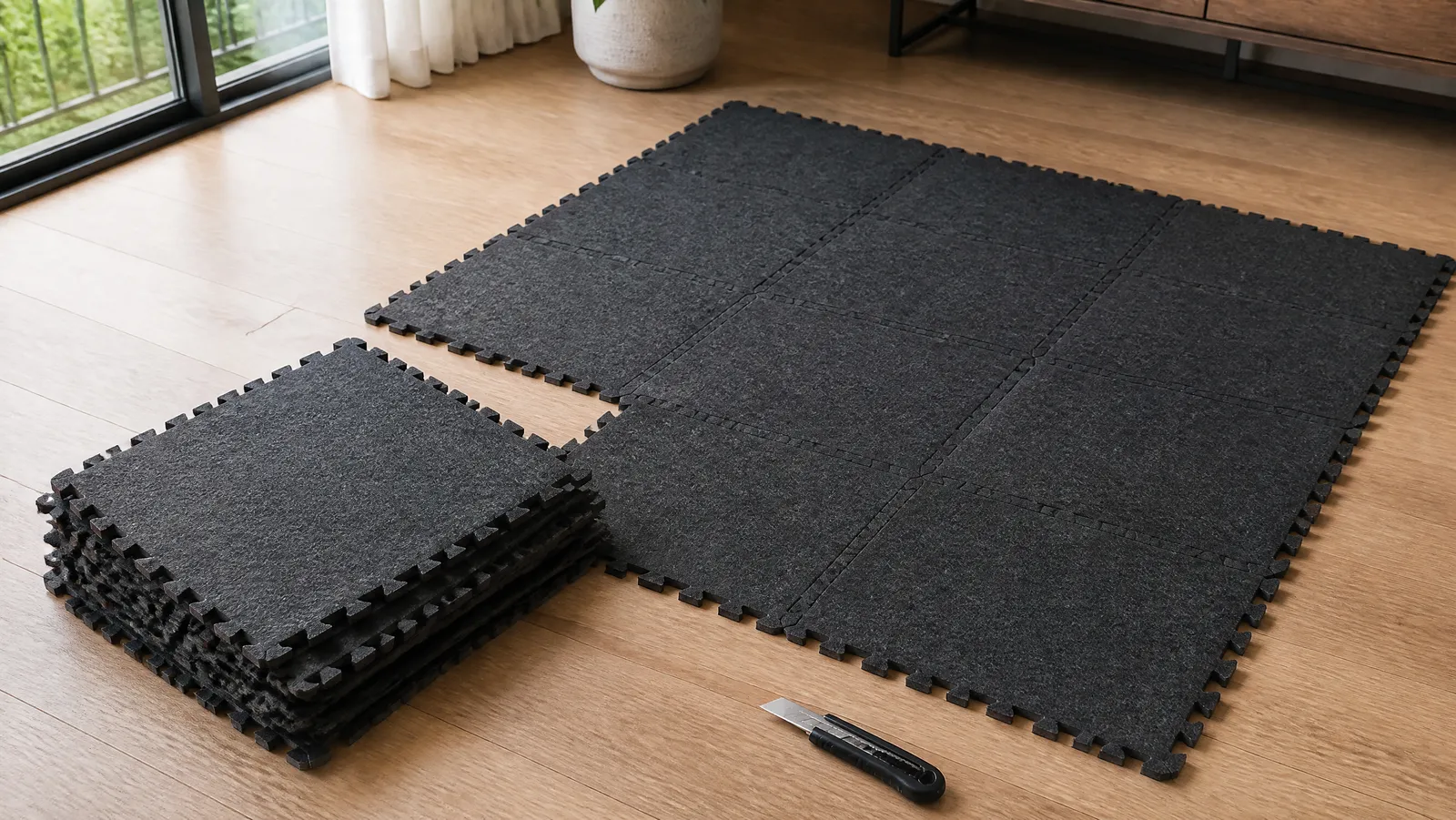
- Foam tape. This Old House describes it as "made from open or closed-cell foam or EPDM rubber with an adhesive backing," good for irregular-sized cracks in window sashes and door frames. It is for compression faces only: the underside of the bottom rail, the meeting rail, the head. Not for sliding surfaces. Bob Vila notes it "tends to wear down faster than more permanent solutions and might need to be replaced every year or two." At these prices, fine.
- D-shape and bulb gaskets. Tubular weatherstripping, per This Old House, is "an effective air barrier made of rubber, vinyl, or silicone" that performs well in high-use areas like window sashes. Bob Vila describes the hollow design as one that "compresses to fill larger gaps around doors and windows" and more durable than felt or foam. A bulb deforms to the shape of the gap instead of resisting it.
- Wedge. A tapered strip, thick at one edge and thin at the other. The answer to a sash that gapes at the bottom and pinches at the top: one strip covers a range of widths instead of a single width.
- V-strip, also called tension seal. This is what belongs in your vertical side channels, and none of our picks is one. This Old House describes it as "a durable plastic or metal strip folded into a 'V' shape that springs open to bridge gaps," designed for the sides of double-hung and sliding windows. Bob Vila places it "along the sides of a window sash or doorjamb," especially on double-hung windows. Foam tape in a sliding channel tends to get torn off by the sash, which is why DOE steers open-cell foam toward "low-traffic areas." V-strip springs against it and survives. Buy a roll locally: vinyl for cheap, bronze for permanent.
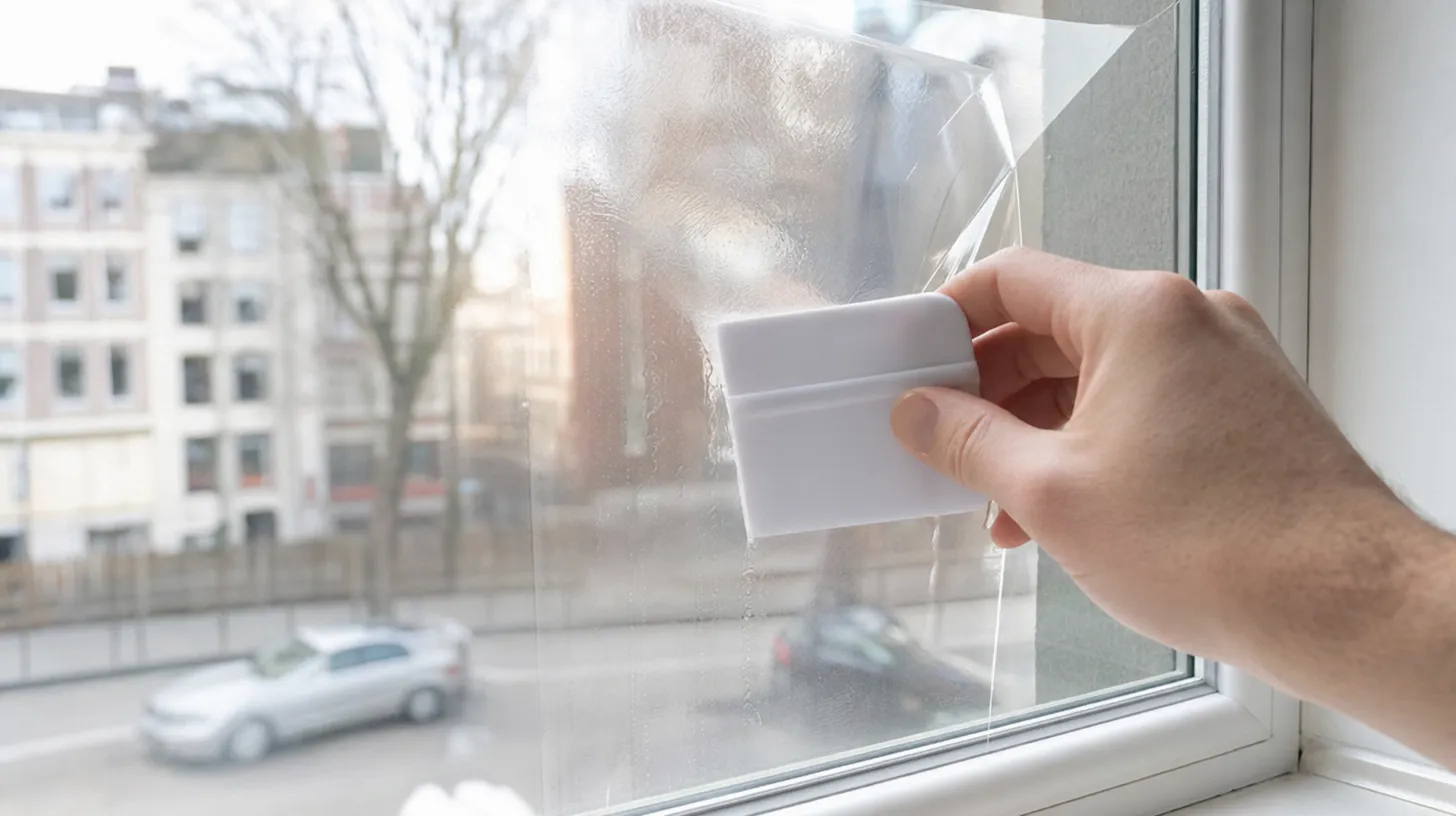
- Sealing tape. Not a cushion. It bridges a joint and shuts it. Correct for a fixed pane, a painted-shut sash, or the frame-to-wall perimeter. Wrong for anything you open.
One profile to skip: felt. This Old House notes it "typically has a shorter lifespan compared to other materials, usually lasting only a year or two," and it compresses permanently, which is the opposite of what a seal should do.
The best weatherstripping to block street noise: our six picks
There is no single window seal kit for noise that fits every sash, so each pick below is named for the gap or surface it is for. Buy by that line, not by the order.
Our Pick — Kikerike Self-Adhesive EVA Foam Weatherstrip
The default first purchase for a noisy window, at about $6.66 as of September 2026. Two 21-foot rolls of half-inch-wide, quarter-inch-thick EVA foam, enough for the full perimeter of several windows. A quarter inch is the sweet spot for the compression faces of a typical double-hung: thick enough to fill a real gap, thin enough that the sash still latches.
The maker rates the foam for -4F to 140F and states the surface must be clean and dry before applying. It cuts with scissors, and at this price you can strip off a section you got wrong and redo it. Start with a roll of this, and only buy something else once you have measured and found it does not fit.
Best for Thin Gaps — Frost King R338H Self-Stick Rubber Foam Weatherseal
About $2.93 as of September 2026, and the seal you reach for the moment a quarter inch stops your window latching. At 3/8 inch wide by 3/16 inch thick it is both narrower and shallower than the Kikerike. Frost King describes it as minimum compression and shock absorbing, which is exactly what a tight sash needs: a seal that does not demand clearance the window does not have. Self-stick black rubber foam, made in the United States. If your paper test came out marginal rather than loose, this is your strip.
Best for Uneven Gaps — Kneelisa Wedge-Shape Foam Window Weatherstrip
About $9.99 as of September 2026 for 118 inches. The profile tapers from 5/32 inch up to 11/32 inch across its width, so a single strip covers a gap that changes size along its length — the exact problem you found if your three measurements disagreed.
The face is what matters. The PU foam core is wrapped in nylon cloth, so the sash slides over it rather than catching. Bare foam in a sliding channel does not survive rubbing contact for long, and this is the only pick here built for it. The maker suggests warming the adhesive backing with a hair dryer in cold weather. If your sashes have never been square, the wedge is the honest answer.
Best for Compression Faces — pundin D-Shape Self-Adhesive Rubber Weatherstrip
About $9.79 as of September 2026 for fifty feet of hollow D-profile TPE rubber, 0.35 inch wide and 0.23 inch thick. The maker specifies it for gaps from 0.1 to 0.22 inch and states full adhesion after 24 hours.
The hollow core is the point: it squashes flat under the sash and springs back, conforming to the gap rather than pushing against it. Fifty feet is far more than one window needs, which makes this roll the sensible buy if you are sealing every window in the apartment rather than one bedroom.
Best Value Per Foot — Bantie EVA Foam Weatherstrip Tape
About $9.99 as of September 2026 for 33 feet of soft EVA foam on a mesh-backed adhesive, cut wider than a standard foam strip according to the maker, so it fills a gap ordinary tape leaves open.
Buy this when your gap turned out wider than standard foam tape covers. Everyone measures thickness and nobody measures width, then wonders why a sealed-looking sash still passes air. The mesh backing is the detail worth paying for, because plain adhesive on soft foam is what peels away in the first cold snap.
Best for a Window You Never Open — XFasten Transparent Window Weather Sealing Tape
About $9.99 as of September 2026 for 90 feet of clear two-inch tape. A different tool from everything above: it does not compress, it seals a joint shut. XFasten describes the adhesive as airtight and watertight, states that it removes without residue and is wood-safe, and rates it for four seasons and beyond.
Use it on a fixed pane, a sash already painted shut, or the frame-to-wall joint the smoke test found. There, it is the cheapest way to close the last percent of open area for a winter. Do not put it on a window you open, need for ventilation, or would climb out of in an emergency.
If street noise is keeping you awake tonight and none of this has shipped yet, a decent pair of earplugs for street noise buys you the week.
Installing weatherstripping so it lasts more than one winter
Most weatherstripping that fails did not wear out. It was installed badly on day one.
- Clean and dry the surface first. This Old House puts it plainly: "Ensure the area where you'll apply the weatherstripping is clean, dry, and free of old adhesive or debris." Isopropyl alcohol on a rag, then let it flash off. Adhesive on dust is adhesive on nothing.
- Warm the adhesive in cold weather. Kneelisa suggests a hair dryer on the backing, and it helps any self-adhesive strip applied in an unheated room.
- Do not stretch the strip as you lay it. This Old House watches for exactly this, noting the installer "is careful not to stretch the weatherstripping." Stretched foam retracts over the following weeks and opens a gap at every end.
- Butt the corners, do not wrap them. Cut each run to length and press the ends together square. Foam bent around a corner lifts off on the inside of the bend, and that lifted spot is a leak.
- Give it time. pundin states full adhesion after 24 hours. Close the window gently the first day.
- Check it once a year. Bob Vila, relaying the Department of Energy's advice, says to check weatherstripping once a year, since heavy use and exposure to the elements can cause materials to wear out.
What weatherstripping will not do
Here is where we cost ourselves a sale. Weatherstripping closes leaks. It does not add mass. Once the gaps are shut, whatever sound is still arriving is coming through the glass, and no amount of extra tape touches that.
That is not a failure, it is a completed step, and it tells you where you are. If the room got noticeably quieter, sealing was your problem and you fixed it for under ten dollars. If it got a little quieter and the traffic is still there, sealing has done its job and the next move is mass with an air cavity behind it: a DIY soundproof window plug for night use, or the bought version of the same idea, which we cover in do soundproof window inserts work. Neither performs properly on an unsealed window, which is why sealing comes first. Curtains sit in a different category again, closer to absorption than blocking, and we compared the two in soundproof curtains versus window inserts.
Renter cautions before you tape anything
- Test the adhesive somewhere invisible. Stick two inches inside the frame channel, leave it a day, then pull. Painted wood in an old apartment can lift, and finding out on the visible face is expensive.
- Prefer strips you can peel, not tape you must scrape. Foam and rubber come off in one piece with a slow steady pull. Residue lifts with isopropyl alcohol or an orange-oil remover, never a blade.
- Never seal a window you need for ventilation. Rooms with gas appliances, rooms where you run a heater, and any room that gets damp all need air movement.
- Never seal a window that is an emergency exit. If your bedroom window is your second way out, it stays operable. No workaround: seal the others, and leave that one on compressible weatherstripping that still opens.
None of this drills, screws or permanently modifies anything, which is why we start renters here rather than at the expensive end. Soundproofing old apartment windows is worth a separate look if your sashes are original.
The order we would work in
- Run the light test, the paper test and the smoke test. Write down where the gaps are.
- Measure each gap at the top, middle and bottom with a stack of business cards.
- Buy foam tape for the compression faces, a wedge if the gap varies, a bulb if it is wide, and V-strip from a local store for the sliding channels.
- Clean, dry, warm, apply without stretching, butt the corners.
- Listen for a night before you buy anything else.
Step five matters most. Sealing is the cheapest step and it changes what the next step should be. If the street is still coming through once the gaps are shut, the problem is mass, and the fix sits inside the room-level order of operations we lay out in how to block traffic noise in a bedroom.
For everything else you can legally do to a rental window, our complete window noise guide has the full stack ranked by payoff per dollar.

Two 21-foot rolls of half-inch-wide, quarter-inch-thick EVA foam, which is enough tape to do the full perimeter of several windows. It cuts with scissors and bends around an uneven frame without fighting you.
The default first purchase for a noisy window. A quarter inch of thickness is the sweet spot for the compression faces of a typical double-hung sash, and at this price you can afford to strip it off and redo a section you got wrong.
*Price shown on Amazon and subject to change.

A thinner, narrower rubber foam seal at 3/8 inch wide by 3/16 inch thick, for a sash that already closes tightly and would bind on anything fatter.
The seal you reach for when a quarter inch stops the window latching. Frost King describes it as minimum compression, which is exactly what you want on a sash that has very little clearance to give.
*Price shown on Amazon and subject to change.

A tapered wedge that runs from 5/32 inch up to 11/32 inch across its width, so one strip covers a gap that changes size along its length. The PU foam core is wrapped in nylon cloth so the sash slides over it instead of catching.
Old apartment windows rarely have a gap that stays the same width from top to bottom, and this is the one profile in the lineup designed for that. The nylon face is the real feature, because bare foam in a sliding channel shreds within a season.
*Price shown on Amazon and subject to change.
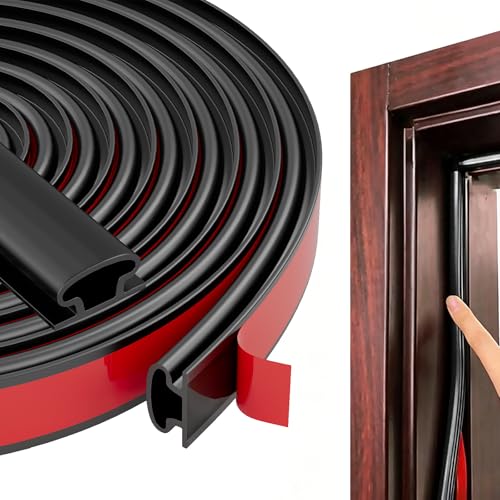
Fifty feet of hollow D-profile TPE rubber, 0.35 inch wide and 0.23 inch thick, sized by the maker for gaps between 0.1 and 0.22 inch. The hollow core squashes flat under the sash and springs back.
A hollow bulb seals better than solid foam of the same thickness because it deforms to the shape of the gap rather than resisting it. Fifty feet is more than most renters need for one window, which makes it the sensible buy if you are doing every window in the apartment.
*Price shown on Amazon and subject to change.

Thirty-three feet of soft EVA foam on a mesh-backed adhesive, cut wider than most foam strips on the shelf so it fills a gap that ordinary tape leaves open.
Buy this one when the gap is wider than your foam tape rather than narrower, which is the failure most people do not think to check. The mesh adhesive backing is the detail worth paying for, because plain adhesive on soft foam is what peels away in the first cold snap.
*Price shown on Amazon and subject to change.

Ninety feet of clear two-inch tape that seals a joint shut rather than cushioning it. XFasten says it removes cleanly without residue, which is the part that matters in a rental.
This is a different tool from the rest of the list. It does not compress, it seals a window closed for a season, so it belongs on a fixed pane, a painted-shut sash or the frame-to-wall joint. Do not put it on a window you need for ventilation or egress.
*Price shown on Amazon and subject to change.
| Pick | Product | Link | |
|---|---|---|---|
| Our Pick | Kikerike — Kikerike Self-Adhesive EVA Foam Weatherstrip (1/2 in x 1/4 in x 42 ft total) | $6.66 | Check → |
| Best for Thin Gaps | Frost King — Frost King R338H Self-Stick Rubber Foam Weatherseal (3/8 in W x 3/16 in T) | $2.93 | Check → |
| Best for Uneven Gaps | KNEELISA — Kneelisa Wedge-Shape Foam Window Weatherstrip (118 in) | $9.99 | Check → |
| Best for Compression Faces | pundin — pundin D-Shape Self-Adhesive Rubber Weatherstrip (50 ft) | $9.79 | Check → |
| Best Value Per Foot | Bantie — Bantie EVA Foam Weatherstrip Tape (33 ft) | $9.99 | Check → |
| Best for a Window You Never Open | XFasten — XFasten Transparent Window Weather Sealing Tape (2 in x 30 yd) | $9.99 | Check → |

Lillie Metayer
Lillie Metayer is the founder of a local program that helps apartment-dwellers take action against noise pollution. Involved in environmental activism since high school, Lillie is passionate about raising awareness of the harms of noise exposure and helping people reduce noise in their communities. In her free time, Lillie enjoys playing the violin and spending time outdoors.