Does soundproof window film work? Barely, and not for the reason the listings claim. Film is a sheet of polyester a couple of thousandths of an inch thick, glued flat to your glass. Blocking sound takes mass and a sealed air gap, and film adds neither. Expect a change you have to strain to hear.
We would rather cost ourselves a sale than let you squeegee a roll of plastic onto your window and hope. Film is an optical product engineered for light, heat and glass safety, and the noise claim got bolted on somewhere in the marketing. The honest fix for a loud window is well documented and mostly cheap, and our full guide to how to soundproof apartment windows walks it in order. Treat this article as the companion piece that explains why the shortcut you found first does not work. It is the same pattern we traced with soundproof paint: a thin surface treatment sold as a barrier.
What Window Film Actually Is
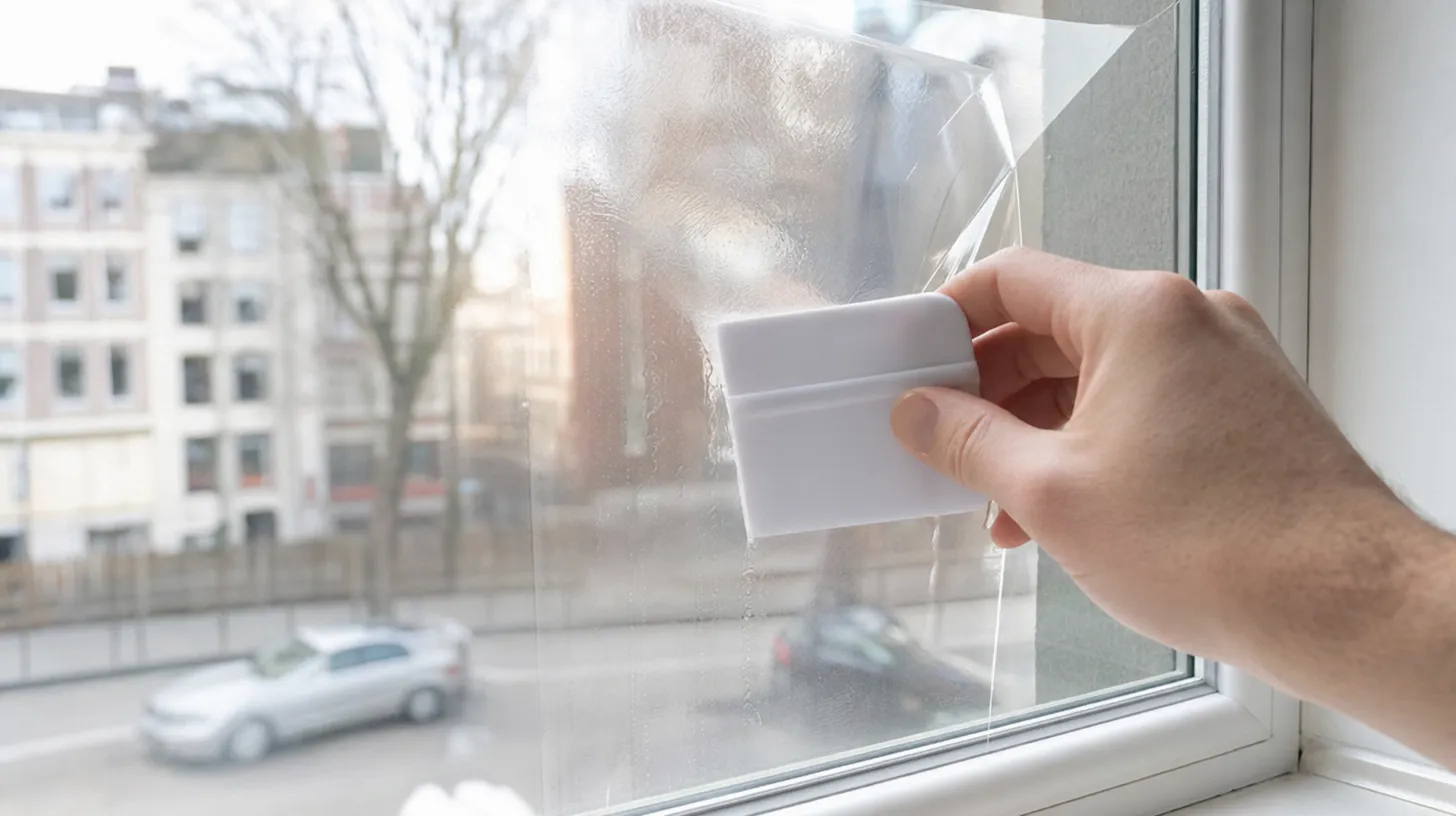
Window film is a thin polyester laminate with adhesive on one side. You wet the glass, squeegee the film onto the inside face, and squeeze the water out. That is the entire product.
Thickness is measured in mils. According to American Window Film, one mil equals one-thousandth of an inch, and standard solar control window films typically measure between 1.5 and 2 mils. So an ordinary film adds roughly two thousandths of an inch to your window. Keep that number in your head for the rest of this article, because it explains everything that follows.
Film is genuinely good at four or five jobs, none of which is noise:
- Solar heat control, cutting the greenhouse effect on a west-facing window
- UV rejection, which is why it is sold to protect floors, art and furniture from fading
- Glare reduction for screens and daytime TV
- Daytime privacy on ground-floor windows
- Shatter resistance, holding broken glass together in the frame
Amersol, a window film company, describes film as something used for blocking UV rays, enhancing privacy and improving energy efficiency. AP Tinting, a tinting firm, puts it more directly: most window films are not designed to be soundproof. Those are the sellers talking about their own catalogue.
Why Noise Blocking Window Film Runs Straight Into Mass Law
Sound arriving at your window is a pressure wave shoving the glass. The pane flexes and re-radiates that sound into your room. You have two ways to slow it down. Make the panel heavier so it is harder to push, or put a second panel in front of it with a sealed pocket of air in between.
The Acoustical Society of America's standards terminology database defines mass-law sound transmission loss as the phenomenon whereby doubling the mass per unit area of a panel increases sound transmission loss by six decibels. Read that backwards and the problem is obvious. To buy yourself even 6 dB, you have to double the weight of the glass. A pane of window glass weighs pounds per square foot. Two thousandths of an inch of polyester weighs a rounding error. It is not a close call.
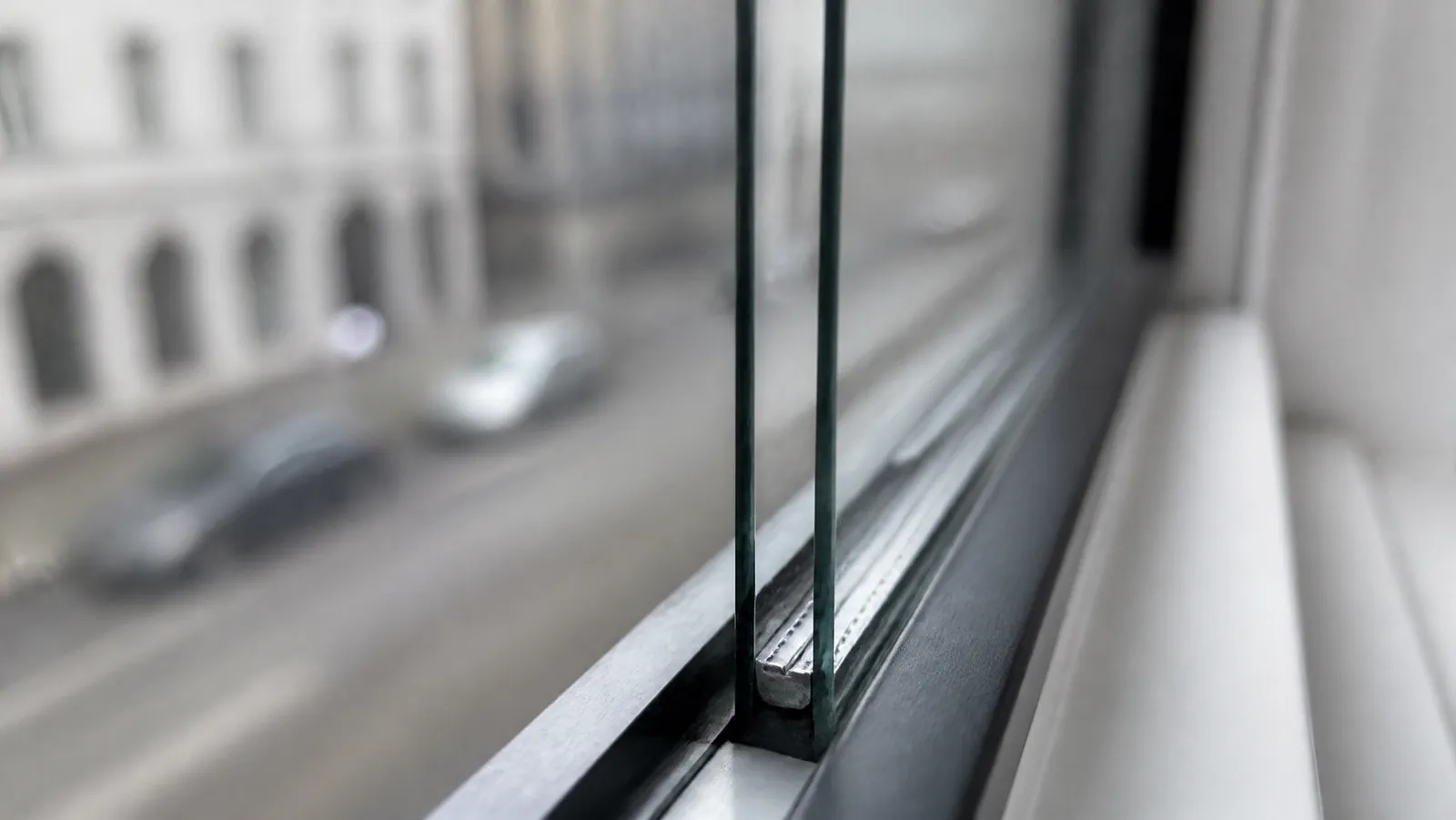
Film fails the second test too. It is bonded flat against the pane, so there is no air gap, no cavity, no decoupling. It does not become a second barrier in front of the glass. It becomes part of the glass. That is precisely why the products that do work at a window are the ones that hold a second sheet of something away from the pane inside a sealed frame.
What the Film Sellers Themselves Say
The strongest evidence against soundproof window film comes from the people who sell it. Companies do not usually talk their own category down. On noise, they do, repeatedly.
Solar Screen, a window film manufacturer, states flatly that a noise blocking window film does not exist. The company describes film as a multi-layered polymer that adds only a small amount of density to existing glass, and says the sound reduction is generally not significant enough to be clearly perceived. Its own recommendations are to seal frames and gaps with acoustic caulk or weatherstripping, hang thick curtains, and look at secondary glazing. Films, it says, should never be relied on as your main solution.
Campbell Window Film is blunter still: there is no specialized noise-blocking window film that can be used to block out significant amounts of outdoor noise. Any film may slightly reduce the sound vibrations coming through your windows, the company says, but it will not make any significant difference to the noise you actually perceive indoors.
AP Tinting says any noise dampening from film is more of a side benefit than a core feature.
Amersol gives film the most credit of the four, and even then only allows that film can reduce noise but will not completely soundproof your home. It also notes that film is less effective against low-frequency noise, which is exactly the traffic rumble and thumping bass most renters are fighting.
When four companies with a direct financial interest in selling you film all tell you film is not a serious noise fix, that is as close to a settled answer as this industry gets.
Does Soundproof Window Film Work Enough to Notice?
Here is the best-case figure, and it comes from a seller. Amersol says acoustic films provide the best noise reduction, often cutting noise by 5 to 7 decibels. Treat that as a marketing ceiling for the thickest multi-layer acoustic window film, not a measured result for the roll you found online.
Now translate it. According to the Federal Highway Administration, a change of about 3 dB is usually the smallest change people can detect without specifically listening for it, and a 9 to 10 dB reduction is heard as roughly half as loud.
Line those up:
- An ordinary 1.5 to 2 mil solar film is a small fraction of the material in a dedicated acoustic film, so whatever it manages will in all likelihood sit at or below that 3 dB detection threshold. In practice, nothing you would notice.
- 5 to 7 dB (the seller's own top-of-range claim for a dedicated acoustic film): audible if you are listening for it, but nowhere close to half as loud.
- 9 to 10 dB: the point at which the street genuinely sounds halved, and no film reaches it.
Even taking the industry best case at face value, you are paying to move from loud to slightly less loud, while the low-frequency noise that wakes you at 6am sails through largely untouched.
The One Honest Use Case for Film
Fair is fair, so here is where film earns something. Thick safety and security film is a different animal from a 2-mil solar film. American Window Film puts architectural security laminates at 4 mils and up, reaching 14 mils or higher for blast protection.
A thick, soft laminate bonded to a pane works as a damping layer, taking some energy out of the glass's own ringing. AP Tinting says thicker or multi-layered films can slightly reduce noise, particularly high-frequency sounds like light traffic or neighborhood chatter. On old, thin, rattly single glazing that is a real if modest effect. The tinny top edge of a bus going past may soften a little.
Two conditions on that. It only makes sense as a bonus if you were buying security or safety film anyway, for a ground-floor window you already worry about. And it does nothing whatsoever for the rumble. If your window is modern double glazing, the unit is already heavier and already has a sealed air gap doing the work, so the film has even less to add, which is a separate question we cover under whether double glazing blocks noise.
Never buy film for noise. Take the small acoustic side effect if it comes free with a purchase you were making for other reasons.
Soundproof Film, Acoustic Glass and Security Film Are Three Different Things
Conflating these three is the single most common error on this topic, and it is how inflated decibel numbers end up attached to the wrong product.
- Soundproof or acoustic window film. A marketing name for a thin polyester laminate you apply yourself. Cheap, renter-friendly, does very little for noise.
- Acoustic laminated glass. Not a film you apply. It is a specialized interlayer bonded inside the glass at the factory. Eastman's Saflex Acoustic is a patented tri-layer PVB interlayer that the company says decreases transmitted sound by up to 10 decibels versus non-laminated glass and reduces perceived loudness by up to 50 percent, targeting the 1000 to 4000 Hz range where human hearing is most sensitive. That is a real, engineered product with real numbers. It arrives as the glass itself. You cannot buy it in a roll, and you cannot retrofit it in a rental.
- Safety and security film. Four to fourteen mils of laminate sold to hold glass together during a break-in or a storm. Noise is a side effect, never the spec.
The trap is that impressive decibel figures belonging to category two get quoted on pages selling category one. If a listing waves a big number at you, check whether that number was measured on glass or on film.
Where the Money Should Actually Go
Order of operations for a rental window, cheapest first. Notice that the film sellers themselves recommend the same sequence.
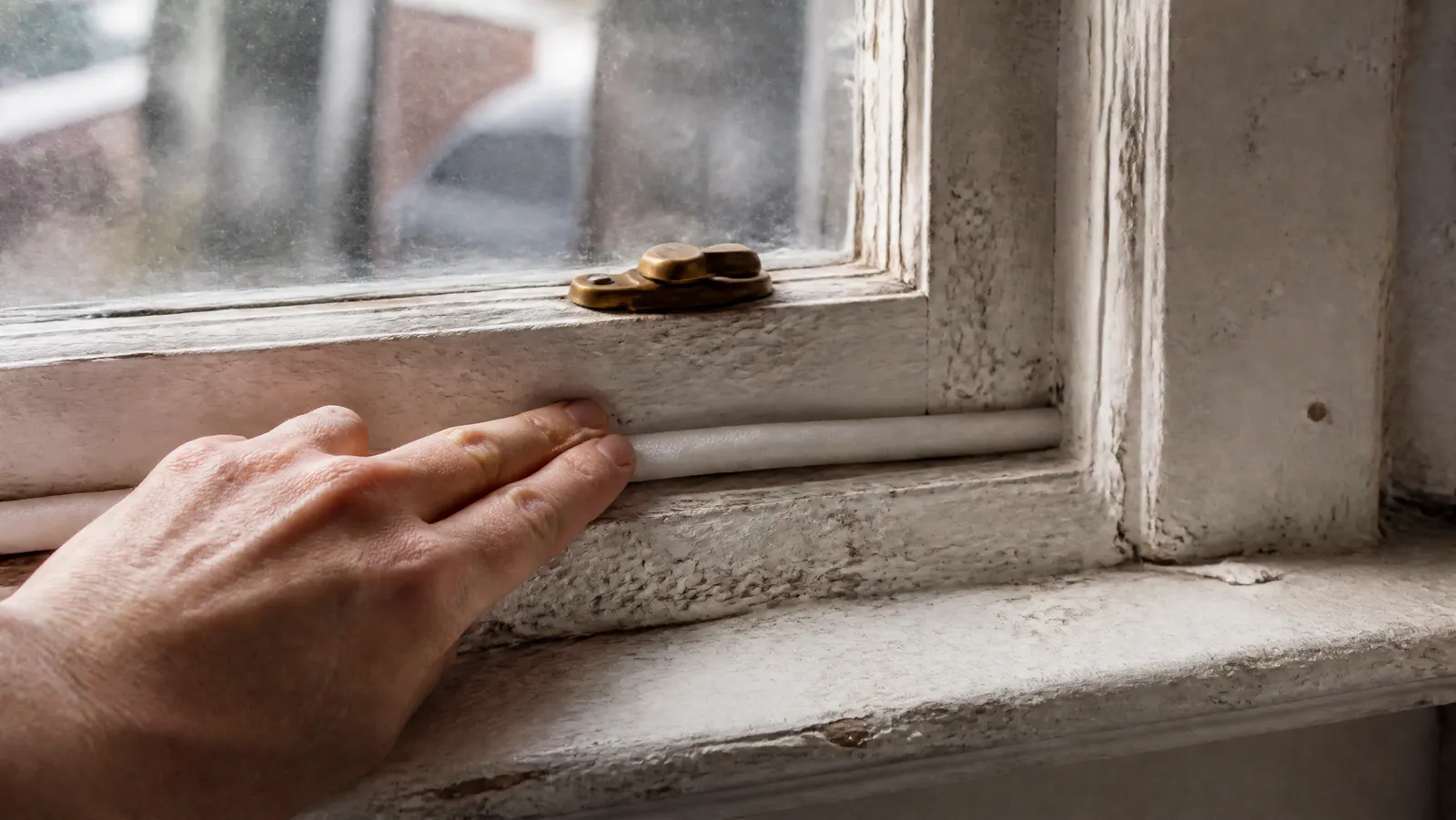
1. Seal the leaks. Sound follows air. A worn sash seal or a gap at the meeting rail will undo any surface treatment you put on the glass, and closing it costs a few dollars rather than a few hundred. This is the single highest-return move at a noisy window, and our guide to weatherstripping to block street noise covers the products and how to fit them without touching the paint. One caution: never seal shut a window you need for ventilation or as a fire escape. An egress window has to keep opening.
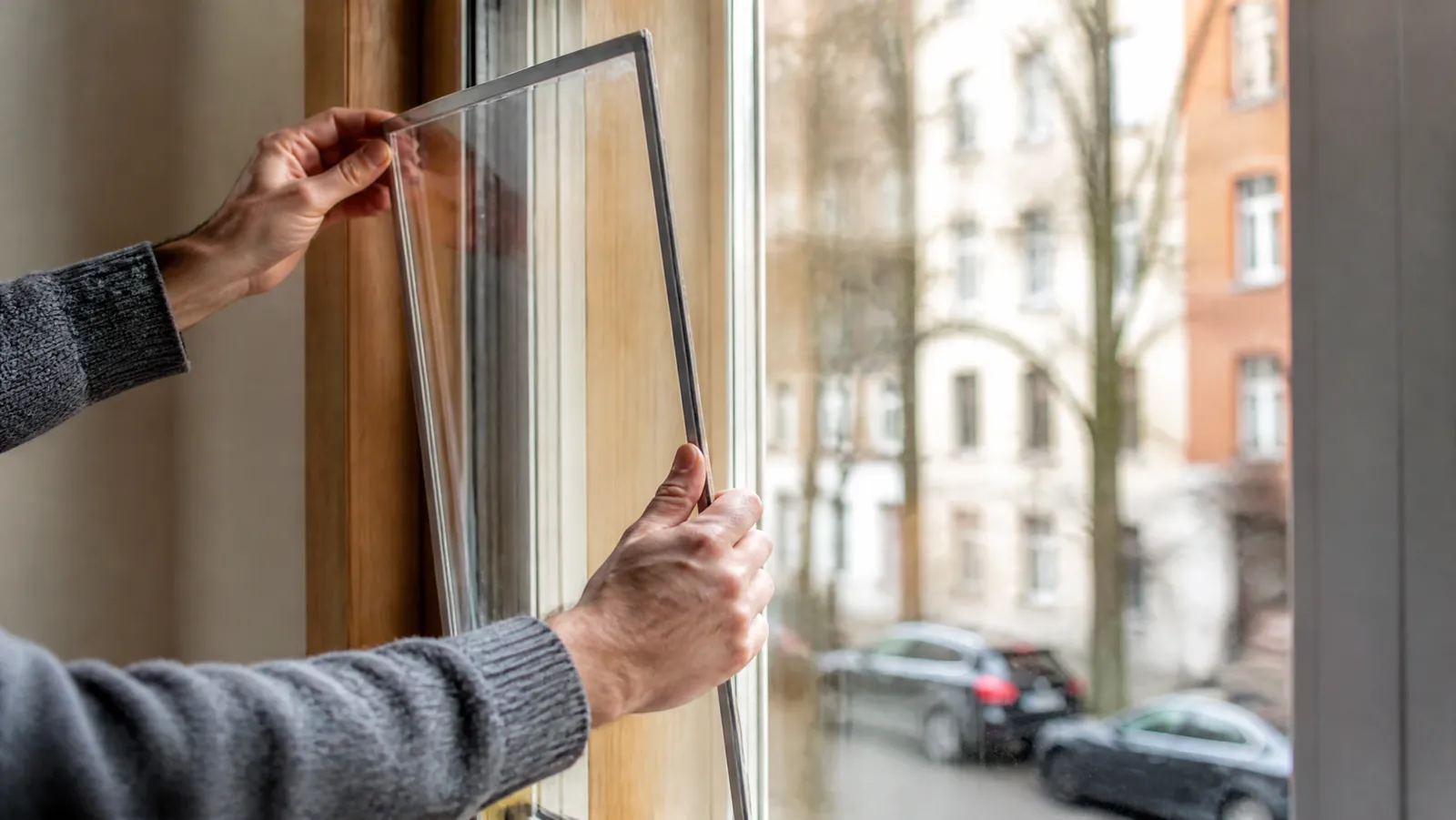
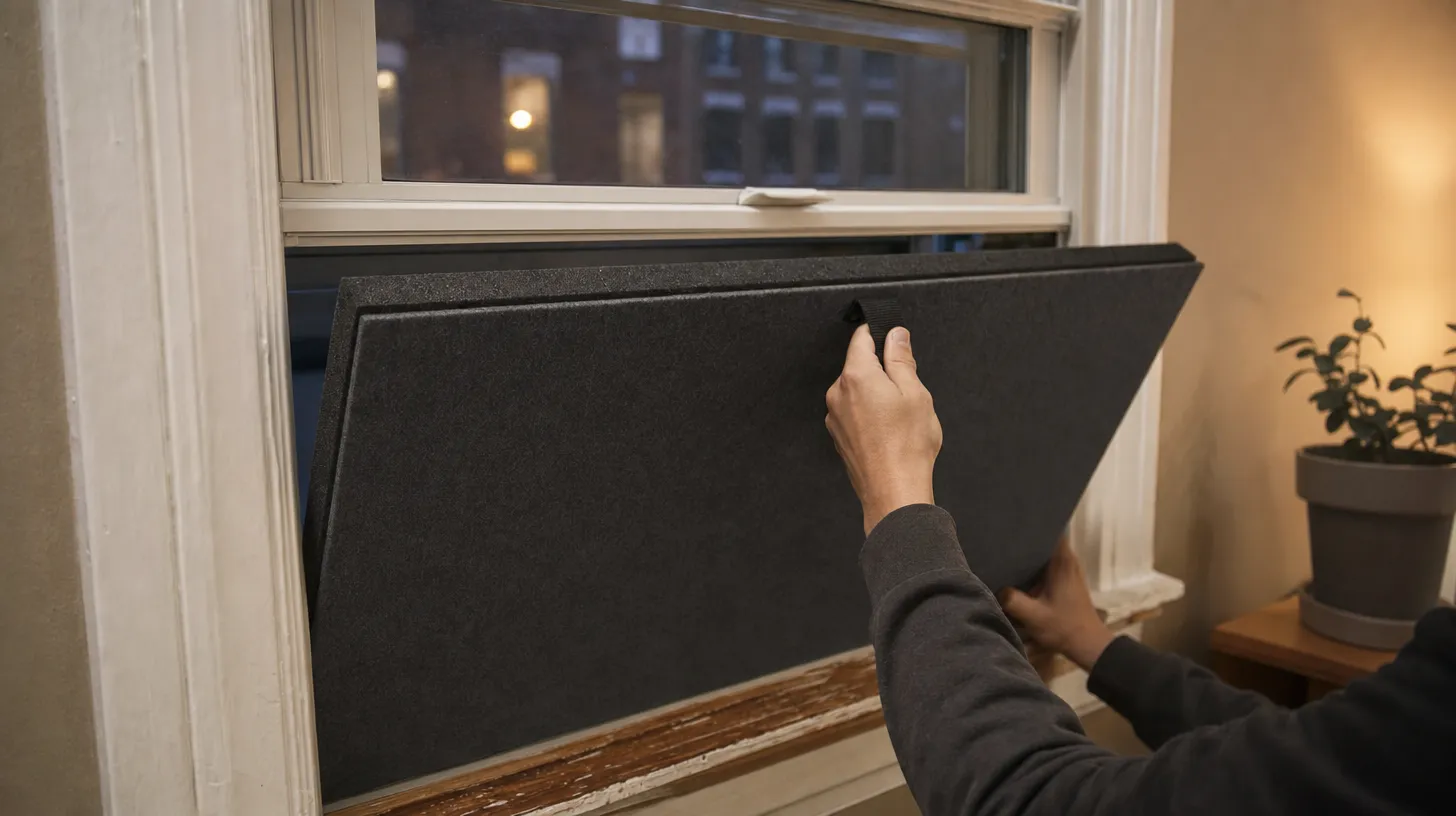
2. Add mass with a cavity. This is the step that actually satisfies the physics, and it is why do soundproof window inserts work is the one window product we will spend real money on. An insert puts a second pane in a sealed frame with an air gap behind it, giving you the mass and the decoupling that film structurally cannot.
3. Soften what still gets through. Heavy drapes will not block much, but they absorb reflections and take some hiss off the room. We put the honest trade-off side by side in soundproof curtains vs window inserts.
4. Protect sleep in the meantime. While you save for step two, the cheapest decibels available are the ones you stop at your ear. See earplugs for street noise.
When Window Film Is Genuinely the Right Buy
None of this makes film a bad product. It makes it a badly named one. Buy it happily if what you want is:
- A west-facing room that stops turning into a greenhouse by 4pm
- Furniture, floors or artwork you want protected from UV fading
- Daytime privacy on a ground-floor or street-facing window
- Glare knocked down on a screen or a TV
- Broken glass held together in the frame rather than on your floor
For renters it has real advantages: it goes on the inside face, it is cheap, and it needs no holes in the wall. It is still a modification to your landlord's glass, and removing it later is not always tidy. Ask permission first and get the answer in writing. Check the manufacturer guidance before applying film to a double-glazed unit, since not every film is approved for every glazing type.
The Bottom Line
Soundproof window film is not a scam so much as a category error: a two-thousandths-of-an-inch optical product wearing an acoustic label. Mass law says blocking sound means doubling weight, film adds essentially none, and gluing it flat to the pane creates no cavity either. The manufacturers agree, on the record, in their own marketing.
Spend the money where it does something. Seal the air gaps first, because that is where most of the street is getting in. Then add a second pane with a cavity behind it if the noise still justifies the spend. Our complete guide to cutting window noise in a rental puts those steps in order by cost and effort, and none of them come on a roll.

Lillie Metayer
Lillie Metayer is the founder of a local program that helps apartment-dwellers take action against noise pollution. Involved in environmental activism since high school, Lillie is passionate about raising awareness of the harms of noise exposure and helping people reduce noise in their communities. In her free time, Lillie enjoys playing the violin and spending time outdoors.