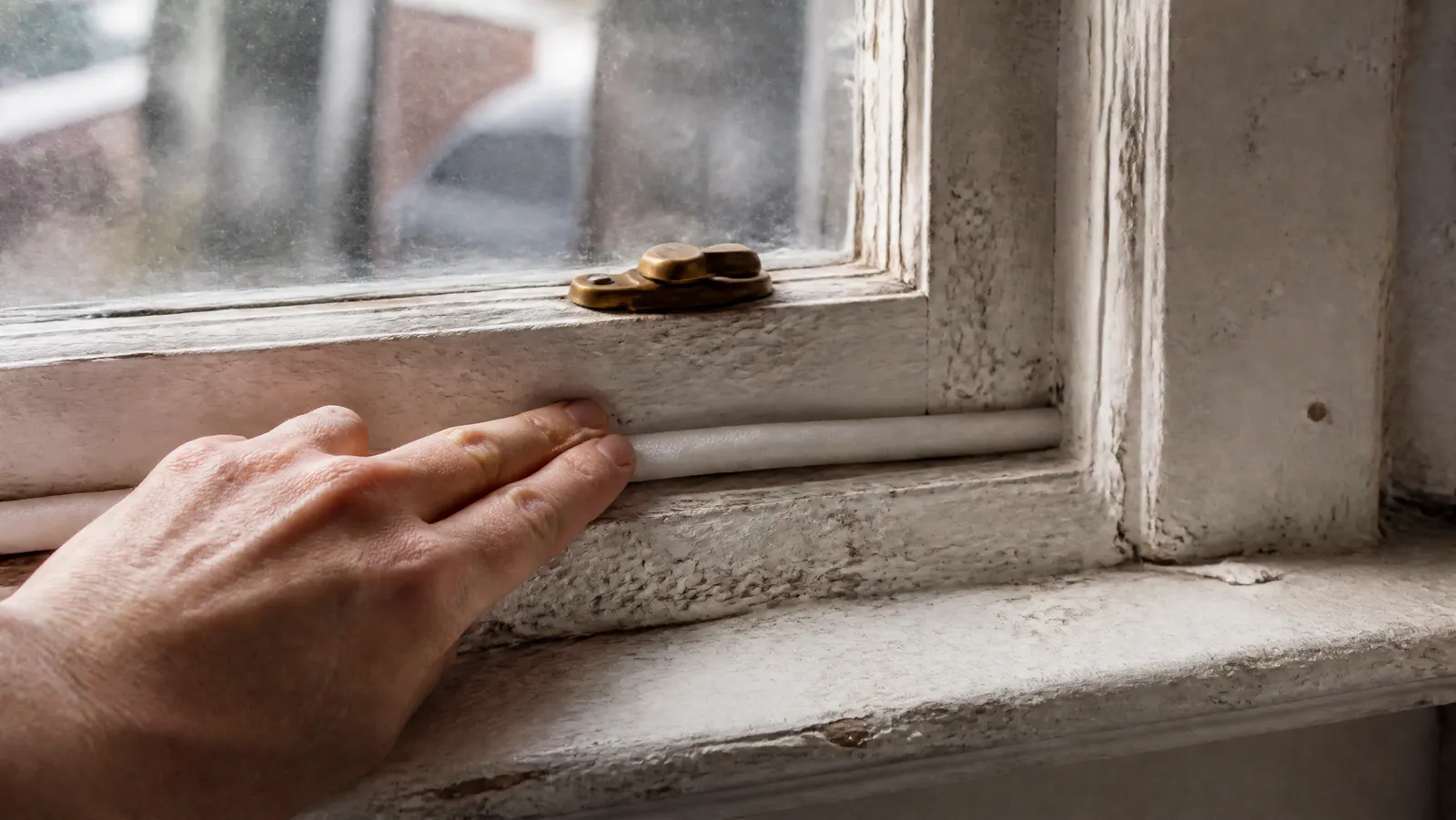
Crouch down and look at the bottom of your closed door. See that strip of light? That's not just light getting in — it's sound, drafts, dust, and cooking smells from the hallway, all using the same opening. The under-door gap is almost always the largest single leak in a room, and because it's a straight, unobstructed air path, sealing it gives you the most noticeable drop in noise of any quick fix. The trick is matching the right type of seal to your gap and your floor.
The four types of door-bottom seal
1. Adhesive sweep (peel-and-stick). A silicone or rubber strip that sticks to the bottom face of the door and brushes the floor as the door closes. It's the cheapest, easiest, renter-safe option and it moves with the door. Best for gaps up to about an inch on smooth floors. Our overall pick, the Suptikes sweep, is this type, as is the longer Holikme strip and the great-value Holikme 2-pack.
2. Slide-on / hook-and-loop sweep. A fabric tube or fin that wraps the bottom of the door and attaches with hook-and-loop, so there's no adhesive to peel off and it glides over rugs and uneven floors. Good for slightly larger gaps. The MAXTID slide-on handles up to 1.4 inches.
3. Screw-on sweep. A rigid aluminum bar with a rubber fin that screws to the door. It's the most durable and the tightest long-term seal, but you'll need to drill — so check with your landlord first. The M-D aluminum sweep is the classic choice.
4. Weighted draft stopper ("snake"). A heavy, fabric-covered tube that lies on the floor against the door. The best modern versions, like the washable hyha stopper, use hook-and-loop so they move with the door and can seal a huge gap — up to three inches — which adhesive strips simply can't.
Measure your gap first
This is the step people skip, and it's why so many sweeps "don't work." Close the door, then measure the gap between the bottom of the door and the floor at a few points (floors are rarely level).
- Up to ~1 inch: any adhesive sweep will do — start with the Suptikes.
- ~1 to 1.4 inches, or you have rugs/uneven floors: go with a slide-on like the MAXTID.
- Big or very uneven gap (up to 3 inches): use the weighted hyha stopper.
- You want it permanent and can drill: the M-D aluminum sweep.
Also measure the door width so you buy a sweep long enough to trim down (you always cut to fit, never stretch).
Installation tips that make the difference
- Clean and dry the surface before applying any adhesive — dust is why sweeps fall off. Press firmly along the whole length and don't open the door for 24 hours.
- Position it just kissing the floor — enough to seal, not so low it drags and tears.
- In cold weather, warm the adhesive with a hair dryer for a minute so it bonds properly.
- For draft snakes, the hook-and-loop versions are worth it so you never have to nudge a loose tube back into place.
This is step two of a bigger job
Sealing the bottom is the highest-impact single move, but the top and sides of the door leak too. This article is the deep-dive on the bottom gap — for the full picture, follow our 5 steps to soundproof your door, which covers perimeter weatherstripping and door seal kits.
Once every gap is sealed, the remaining noise comes through the door panel itself. If yours is a thin hollow-core door, add mass with the techniques in prevent sound from traveling through your door with absorption. And for the noise that still gets through at night, layer on heavy curtains, a white noise machine, or earplugs.
FAQ
What's the difference between a door sweep and a draft stopper?
A sweep attaches to the door (stick-on, slide-on, or screwed) and moves with it. A draft stopper is a weighted tube that sits on the floor. Sweeps are tidier and always in position; modern hook-and-loop stoppers combine the best of both and seal bigger gaps.
Will a door sweep really reduce noise, or just drafts?
Both. The gap that lets cold air in is the same gap that lets sound in, so sealing it cuts airborne noise (voices, hallway sounds) along with the draft. It won't stop heavy structural noise transmitted through the building.
Do I need to drill into my door?
No. Adhesive and slide-on sweeps and weighted stoppers all install without tools and leave no damage, which makes them ideal for renters. Only the heavy-duty aluminum sweep needs screws.
My floor is uneven — what should I use?
A weighted, hook-and-loop draft stopper like the hyha or a flexible slide-on sweep conforms to an uneven gap far better than a rigid screw-on bar. Measure the gap at several points and size for the widest spot.

A self-adhesive silicone sweep that sticks to the bottom of the door and seals gaps up to an inch. Moves with the door, installs in minutes, and trims to width with scissors.
Cheap, sticks firmly, and the under-door light vanished. The hallway noise that used to pour in at floor level is finally gone.
*Price shown on Amazon and subject to change.
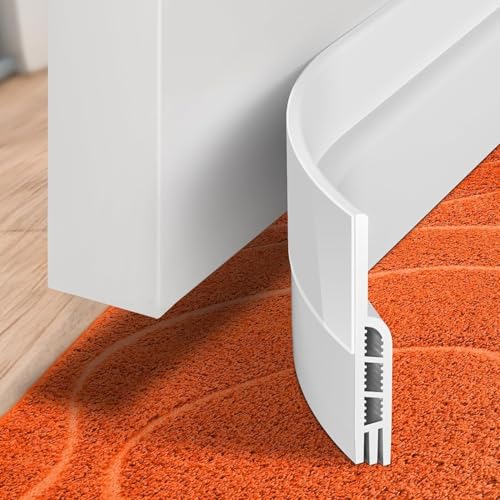
A 41-inch silicone strip with strong adhesive that fills gaps up to an inch. A touch longer than most, so it suits wider doors, and it installs in about two minutes.
The adhesive actually holds. I cut it to length, pressed it on, and the draft and noise under the door both stopped.
*Price shown on Amazon and subject to change.

Two silicone sweeps in one pack for the price of one, sealing 0-1 inch gaps. Do two doors, or keep a spare for when the first one eventually needs replacing.
Two for the price of one and they work great. I did my bedroom and front door with a single order.
*Price shown on Amazon and subject to change.

A fabric sweep with a smooth glide that handles gaps up to 1.4 inches and uses hook-and-loop so it moves with the door across tile, wood, or carpet. Trim to fit.
Glides over my rug without catching and seals a bigger gap than the stick-on strips could. No adhesive residue to worry about.
*Price shown on Amazon and subject to change.

A screw-on aluminum sweep with a single rubber fin that seals gaps up to 3/8 inch. The most durable, permanent option if you can put a few screws in the door.
This is the one that lasts. Screwed it on once and it has sealed tight for years, far more solid than any stick-on. (Note it can take a little longer to ship.)
*Price shown on Amazon and subject to change.

A weighted, glass-bead-filled stopper that seals gaps up to 3 inches with a removable, machine-washable cover. The pick for old doors with a big, uneven gap.
My ancient door has a huge gap and this is the only thing that filled it. The cover zips off to wash, which is great by the front door.
*Price shown on Amazon and subject to change.
| Pick | Product | Link | |
|---|---|---|---|
| Our Pick | Suptikes — Suptikes Under-Door Draft Stopper Sweep (2 x 39 in) | $8.98 | Check → |
| Best Adhesive Strip | Holikme — Holikme Door Draft Stopper Strip (41 in) | $6.99 | Check → |
| Best Value 2-Pack | Holikme — Holikme Door Draft Stopper, 2-Pack (37 in) | $7.99 | Check → |
| Best Slide-On Sweep | MAXTID — MAXTID Under-Door Draft Stopper (36 in) | $12.99 | Check → |
| Best Heavy Duty | M-D Building — M-D Aluminum Door Sweep (36 in) | $17.48 | Check → |
| Best for Large Gaps | hyha — hyha Door Draft Stopper, Washable (36 in) | $19.99 | Check → |

Lillie Metayer
Lillie Metayer is the founder of a local program that helps apartment-dwellers take action against noise pollution. Involved in environmental activism since high school, Lillie is passionate about raising awareness of the harms of noise exposure and helping people reduce noise in their communities. In her free time, Lillie enjoys playing the violin and spending time outdoors.