The honest answer to how to soundproof an apartment ceiling is that you mostly can't — not as a renter, and not against footsteps. Everything that genuinely blocks sound through a floor/ceiling assembly means opening the ceiling or building a new one under it, and your lease forbids both. What you can reversibly do is real, but small.
We know that is not what you searched for at 11:40 p.m. while someone above you crosses the kitchen in what sounds like work boots. So here is the deal we'll make with you: no hype, no foam-panel fantasy, and no product that quietly does nothing. Ceiling soundproofing is the worst effort-to-payoff job in apartment acoustics, and pretending otherwise is how renters end up $200 down with the exact same thumping.
This guide walks the ladder honestly — what actually works and why you can't do it, what you can do without a drill or a deposit hit, what each of those realistically buys you, and where the same money goes much further. If you want the wider strategy across every surface and tactic, our pillar guide on how to reduce noise from upstairs neighbors covers the whole problem; this page is the ceiling chapter.
Why the Ceiling Is the Hardest Surface in Your Apartment
Walls and doors leak sound mostly through air — gaps, thin panels, outlets. Ceilings are different, because the noise you hate is not really arriving through the air at all.
Footsteps, dropped phones, chair scrapes, and a toddler's landing are impact noise: a physical strike on the floor structure that turns into vibration and travels through the building's bones. According to Second Skin Audio, impact noise from footsteps travels as vibration conducted through the drywall that is linked by joists to your neighbor's floor, which means your ceiling is the last thing that vibration passes through — not the thing carrying it. Treating that surface is treating the tailpipe, not the engine.
Airborne noise from above (voices, a TV, bass) is a separate problem with different fixes, and confusing the two is the single most expensive mistake renters make here. We break the distinction down in impact noise versus airborne noise, and it is worth five minutes before you buy anything.
There is also a structural reason your ceiling underperforms. Section 1206 of the 2021 International Building Code requires floor/ceiling assemblies separating dwelling units to hit a minimum STC 50 and IIC 50 (or 45 when field-tested) — STC measuring airborne isolation, IIC measuring impact isolation. Most apartments are built to the minimum, and that minimum still lets a heel strike through loud and clear. AcousPlan also notes that bare concrete slabs land at IIC 25 to 35, far below the 50 minimum, and that the only compliant configurations involve soft floor finishes such as carpet or a floating floor system.
Read that last part again, because it decides everything below: the code-compliant fix for impact noise lives on the floor above you, not on the ceiling below it.
What Actually Blocks Noise From an Upstairs Neighbor — And Why Your Lease Says No
There are four proven ways to quiet a floor/ceiling assembly from below. All four are construction.
- Sound isolation clips with hat channel. Rubber-isolated clips hold the channel, the channel holds the drywall, and the drywall never touches the joists. According to Second Skin Audio, isolation clips can take a standard assembly from roughly STC 35 to 55 or higher — up to a 20-point gain — and if you cannot access the floor above, decoupling the ceiling with clips is the only way to improve the IIC rating against impact noise from upstairs. It also requires tearing your existing ceiling down first.
- Resilient channel. The cheaper, older version of the same idea, and far less forgiving. According to Better Soundproofing, resilient channel is notoriously prone to short-circuiting: a single screw driven too deep, or a drywall edge touching the framing, eliminates most of the benefit. Pros get this wrong regularly.
- A second layer of drywall with a damping compound. Adds mass and turns vibration into heat. It helps airborne noise most. According to Soundproof Central, thicker drywall adds mass that improves resistance to airborne noise such as voices and television, but soundproofing a ceiling only cuts down slightly on impact noise from above.
- A decoupled drop ceiling. A whole second ceiling framed and hung below the first with an air gap. Effective, and unmistakably a renovation. It also eats three to six inches of your head height.
Now the money. According to Angi's 2026 cost guide, ceiling soundproofing generally runs $5 to $20 per square foot, and SoundPro Solutions puts a ceiling project anywhere from around $300 for a basic DIY fix to $6,000 or more for a professional-grade install.
Every option above leaves the ceiling permanently different from how you found it. That is a lease violation in most US rentals, and even with a landlord's blessing you would be paying four figures to improve someone else's building — a building you may leave in eleven months. We do not recommend any of it for renters. Not because it doesn't work, but because it isn't yours to do.
Renter-Friendly Ceiling Soundproofing, Ranked by Actual Payoff
Here is what is left, ordered by how much it changes your life. Notice that the highest-payoff item on this list is free and involves no ceiling at all.
1. Seal the air gaps (helps voices and TV, not footsteps)
Airborne sound follows air. If you can hear a conversation or a laugh track from above with unusual clarity, some of it is arriving through openings, not through the assembly: a shared HVAC vent, a rattling return grille, the perimeter gap where the ceiling meets the wall, or a poorly fitted light trim.
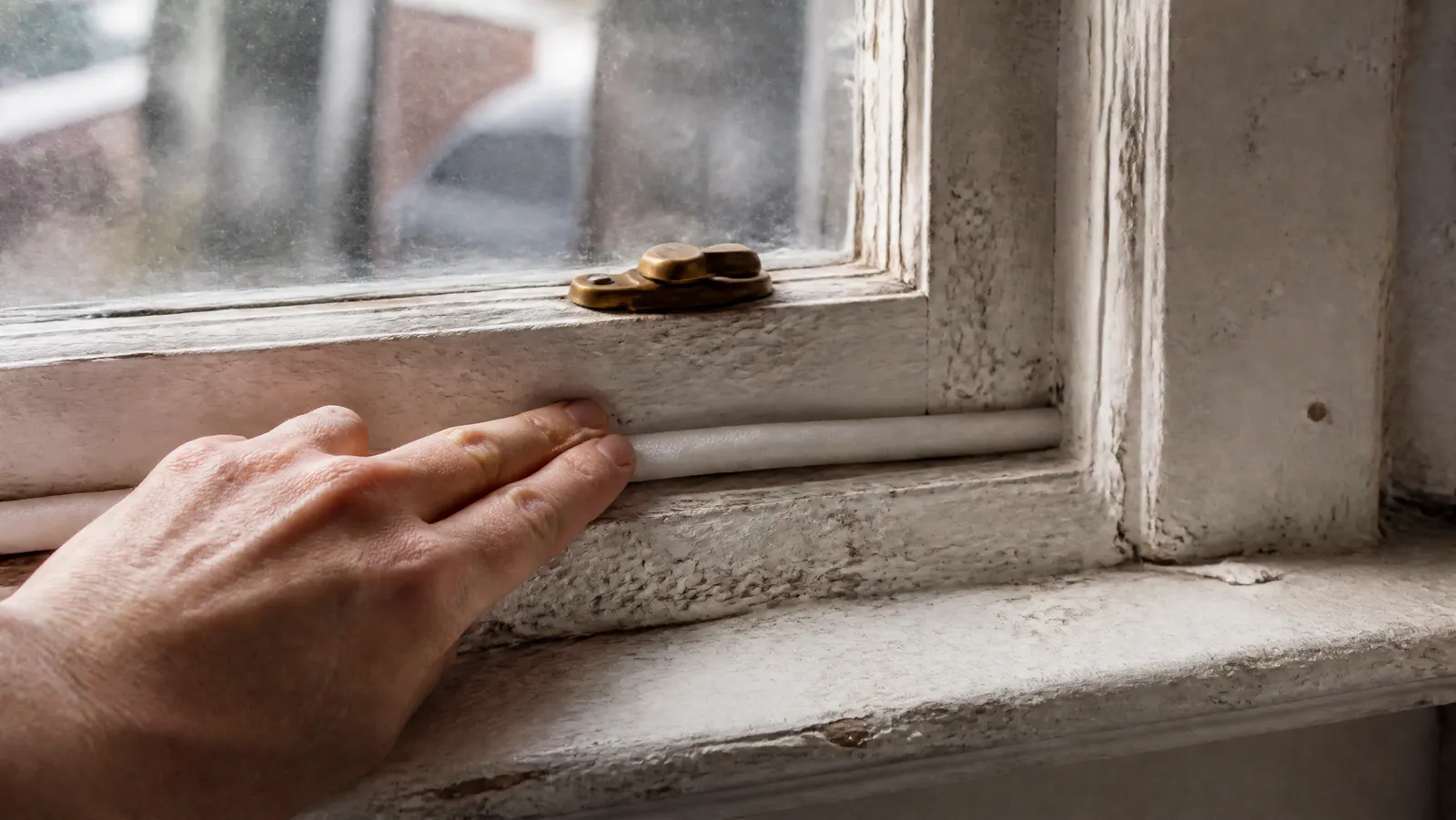
Renter-safe moves: reseat or replace a loose vent cover, close an unused vent with a removable magnetic cover, and use removable weatherstripping or caulk-strip (not permanent caulk) at an obviously open ceiling-to-wall seam. Leave recessed light housings alone. Fixtures are specified with clearance requirements around them, and packing insulation or foam into or against one is a fire hazard, not a soundproofing tip.
This is the only genuine blocking move available to you, and it is worth doing because it's cheap. It will do nothing measurable for footsteps.
2. Treat the echo in your room (it will not stop the thumping)
This is where the money usually gets wasted, so be clear on the physics. According to Armstrong Ceiling Solutions, ceilings with a high NRC only absorb sound within the space and cannot block sound from leaving or entering it. National Ceiling Systems adds that NRC and CAC ratings pull in opposite directions — to raise NRC a tile must be softer, while to raise CAC (its ability to block transmission) it must be harder and denser.
Translation: every soft, hangable, renter-friendly thing you can put up is an absorber. Absorbers shorten the ring, the slap, and the hollow echo inside your room. They do not stop anything from crossing the assembly.
That is still worth something. A bare-walled, hard-floored apartment makes every thump ring out and linger; a room with a big rug, heavy curtains, upholstered furniture, and a couple of fabric panels makes the same thump land shorter and duller. Mount all of it on removable hardware — the same deposit-safe logic we use in our damage-free wall playbook.
3. Add soft mass to the room, not to the ceiling
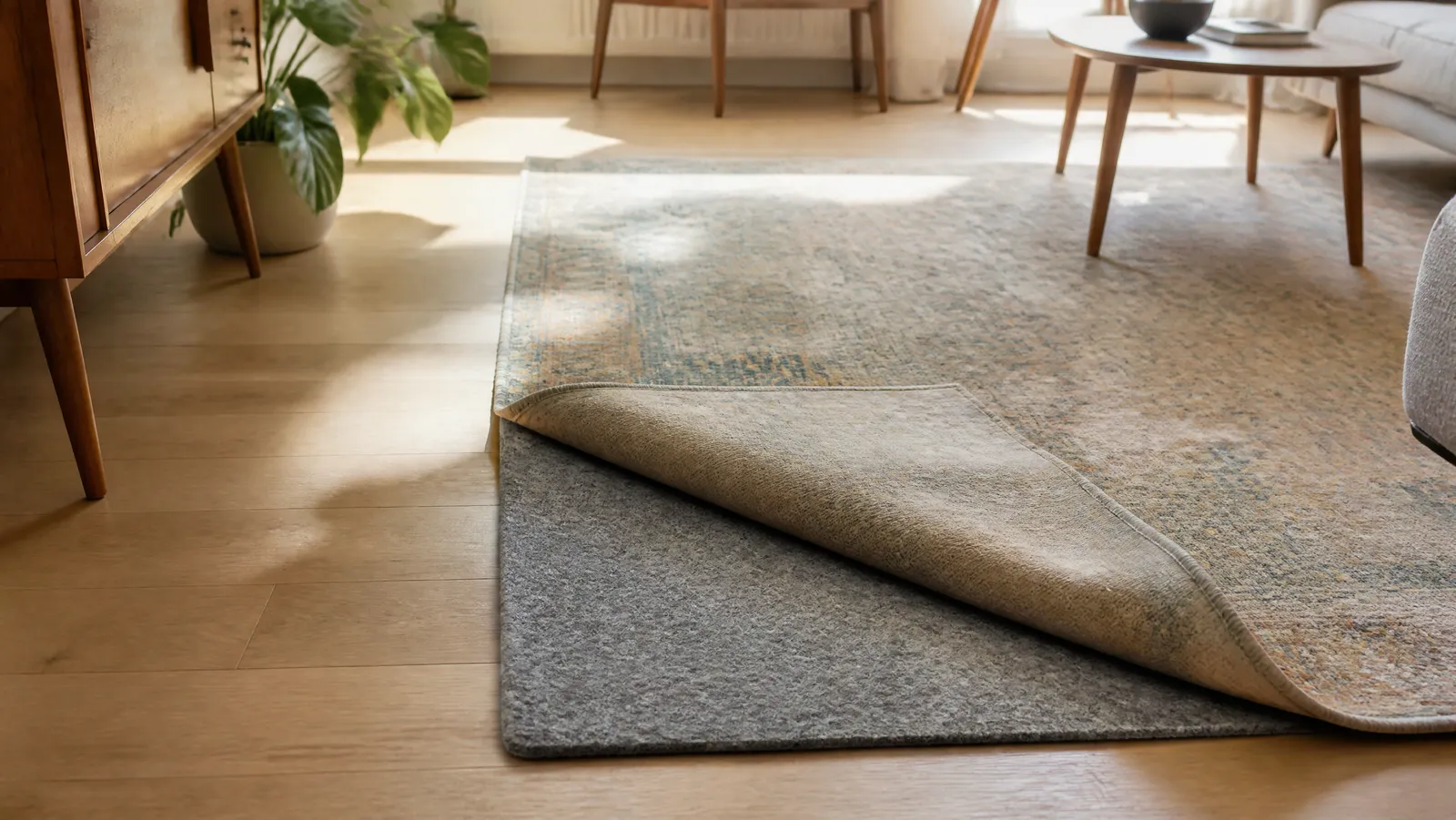
A thick rug with a dense pad, a full bookshelf, an upholstered headboard, floor-length curtains. All of it lowers your room's liveliness, and the rug does double duty by cutting the impact noise you send to the neighbor below — which is a good thing to be able to mention when you knock on the door upstairs.
4. Move the bed
Free, immediate, and routinely the biggest perceived improvement on this page. Impact noise is loudest directly beneath the traffic path above — usually the line from bedroom to bathroom to kitchen. Spend one evening mapping where the footsteps are loudest, then move your bed, desk, or couch out of that lane and toward the quietest corner. You are not reducing the noise; you are reducing your exposure to it. Your ears do not know the difference at 2 a.m.
What Each of These Actually Changes
Set expectations now so you are not disappointed later:
- Sealing gaps and vents: a small but real improvement to voices, TV, and music bleeding down. Zero change to footsteps.
- Absorption (panels, curtains, rugs, fabric): your room sounds warmer and calls sound cleaner, and the thump loses its ring. The thump's loudness is essentially unchanged.
- Soft mass on your floor: helps the person below you more than it helps you.
- Bed and furniture placement: often the single biggest night-to-night improvement, at a cost of zero dollars.
And the sentence we would want someone to tell us first: if you tape foam or fabric to your ceiling, you will hear essentially no change in footstep noise. Not a small change. Essentially none. Please read that before you spend the money.
Where the Same Money and Effort Go Much Further
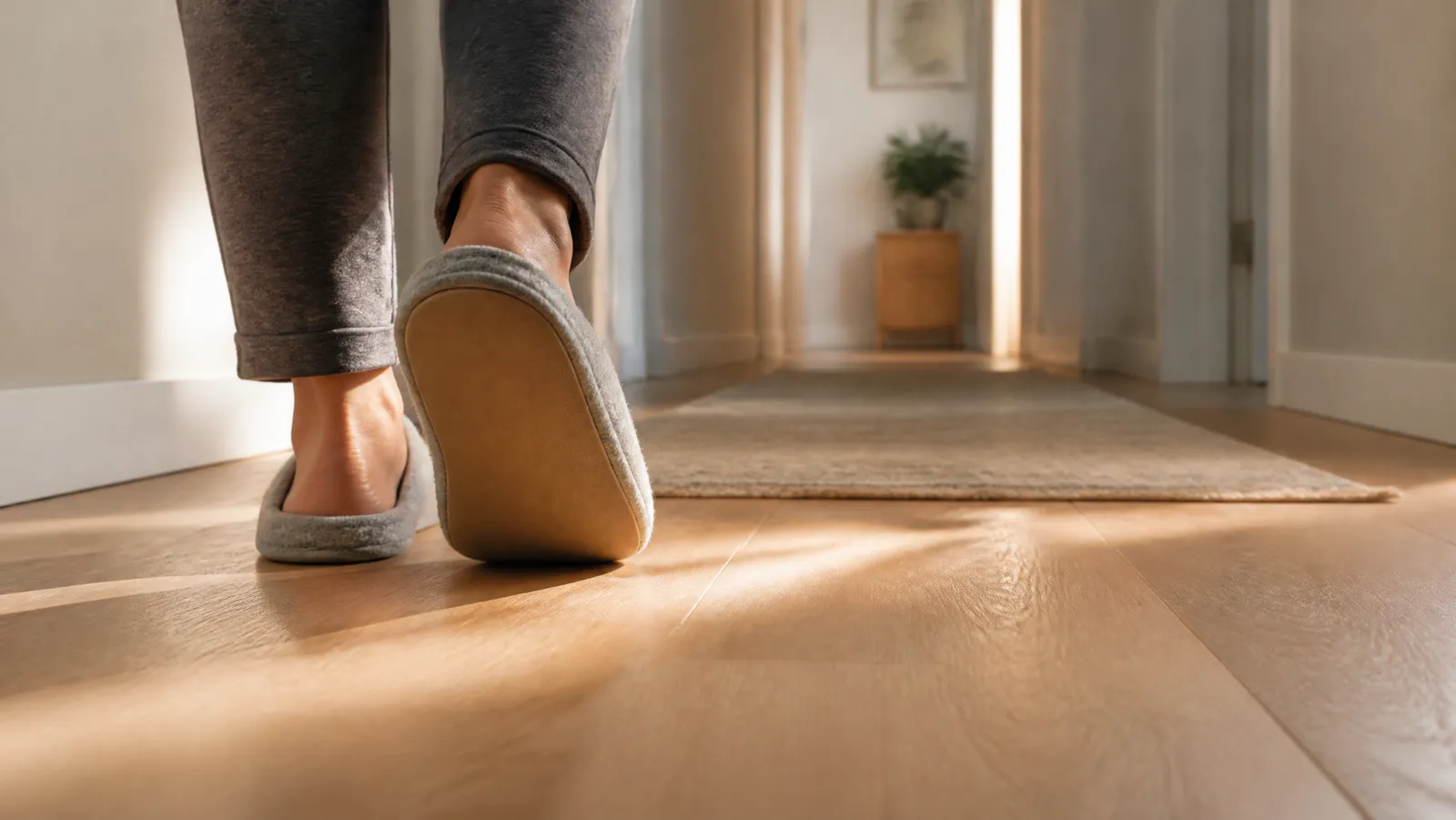
Talk to the neighbor about their floor. This feels harder than shopping, and it works better. According to Flooring Clarity, replacing a hard floor with carpet plus a good underlay can improve a floor's IIC rating by 10 to 20 points, and apartment retrofits often show a noticeable drop in footstep complaints afterward. The same source notes that a high-density underlay matters more than raw thickness, with 6 to 8 mm being typical for residential use. And as AcousPlan notes, soft floor finishes are one of the few configurations that bring a bare slab up to code in the first place. A large rug and a dense pad for their high-traffic path costs a fraction of any ceiling project, and offering to split it is a remarkably effective conversation opener. Slippers or house shoes are free.
Mask what you can't block. According to a systematic review of noise as a sleep aid published in Sleep Medicine Reviews, white noise is thought to work through auditory masking — raising the background noise level in a sleeping environment increases the threshold an external sound must clear to wake you. Be honest with yourself about the evidence, though: according to McGill University's Office for Science and Society, even though that review of 38 studies made continuous noise look helpful, the quality of the evidence was very low and the studies were too different from one another to compare — and in one study, pink noise used to mask environmental sounds made sleep worse than the environmental sounds on their own. Keep the volume modest and judge by your own sleep, not by the marketing.
Spend the effort on a surface that responds. If you also share a wall with a loud unit, that surface is genuinely treatable in ways a ceiling is not — start with how to soundproof apartment walls. Good earplugs are also a legitimate answer, not a defeat.
Don't Bother With This
A short list of things sold for ceilings that will not solve your problem:
- Acoustic foam stuck to the ceiling. It absorbs echo, blocks nothing, and glue on a ceiling is a deposit story with a bad ending.
- Soundproof paint. No coating adds meaningful mass or decoupling — we tested the claims in does soundproof paint work.
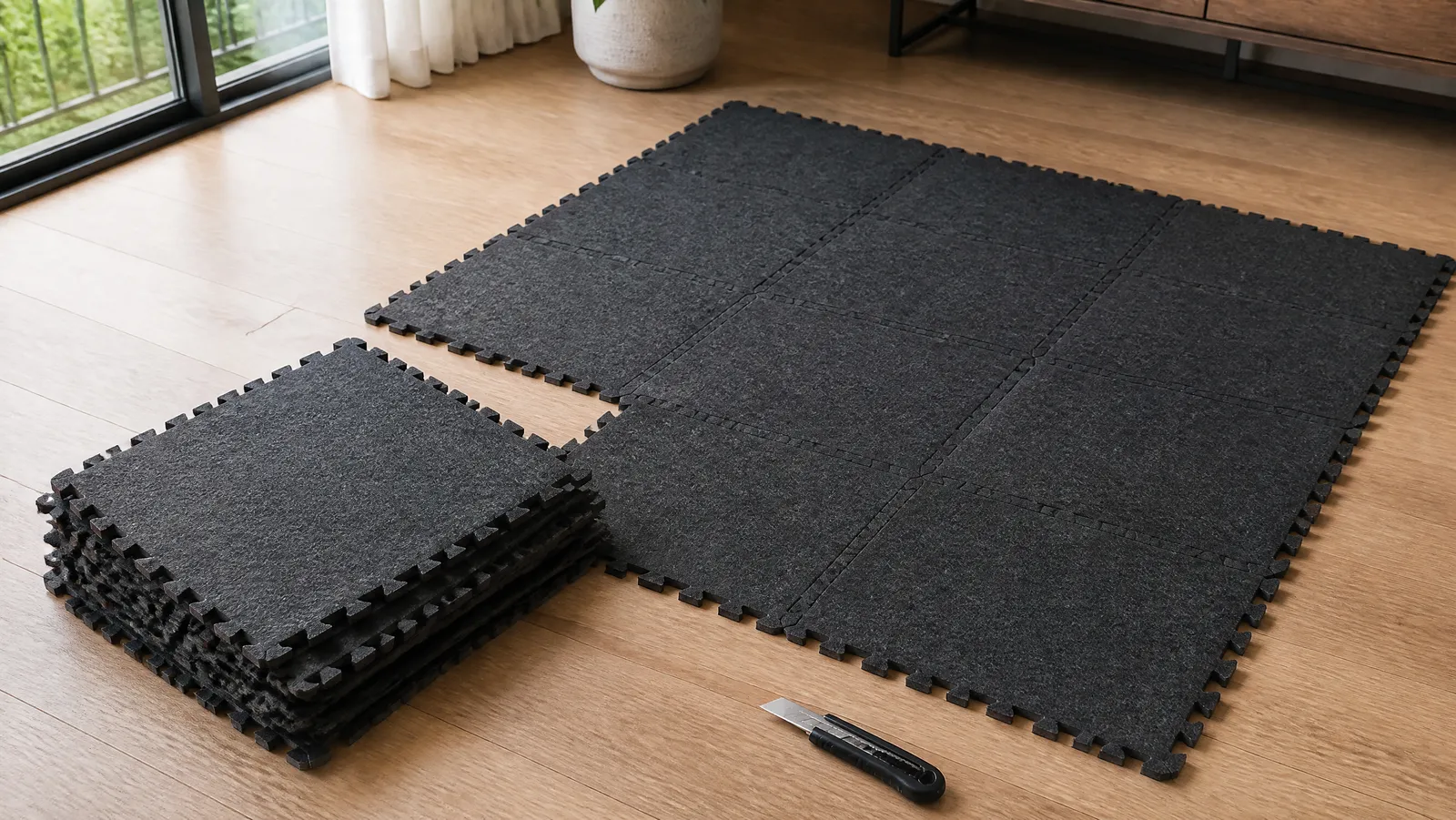
- Thin foam or EVA floor mats stapled overhead. Wrong material, wrong direction, holes in the ceiling.
- Egg cartons. Still not acoustic treatment. Still flammable.
- Mass-loaded vinyl hung from a rental ceiling. MLV is an excellent barrier material, but it only performs fastened tight to structure — and it targets airborne noise, which is not your main complaint.
- Fabric draped as a false ceiling. It changes nothing about impact noise and can run afoul of fire code.
The Honest Bottom Line
Ceiling soundproofing is the one job in this hobby where we tell renters to stop and redirect. The methods that work require opening the assembly, your lease says no, and even a well-built ceiling only partly tames impact noise. What is left for you is sealing air gaps, absorbing echo, adding soft mass to your own room, and moving where you sleep — a real toolkit that buys you a calmer-sounding apartment and a duller thump, not silent footsteps.
So spend the ceiling budget on the three things that actually move the needle: a conversation with the neighbor about a rug, a masking sound you can live with, and better placement of your bed. Then work the surfaces that respond. When you are ready for the full strategy, The Soundproof Apartment's renter's guide to upstairs noise puts every one of these in order for you.

Lillie Metayer
Lillie Metayer is the founder of a local program that helps apartment-dwellers take action against noise pollution. Involved in environmental activism since high school, Lillie is passionate about raising awareness of the harms of noise exposure and helping people reduce noise in their communities. In her free time, Lillie enjoys playing the violin and spending time outdoors.