This is the article where we correct the internet's favorite soundproofing myth. Walk into any forum and you'll see people gluing egg-crate foam to a door and wondering why it didn't block their neighbor. The answer is simple: absorption and blocking are two different jobs. Understanding the difference is the key to actually quieting a noisy door — and to not wasting money.
Absorbing vs. blocking: the crucial difference
- Absorption soaks up sound energy inside a room. It reduces echo and reverb, makes voices clearer, and takes the harsh edge off noise that's already in the space. Foam, acoustic panels, and blankets are absorbers. They make a room sound better.
- Blocking (or "transmission loss") stops sound from passing through a surface to the other side. Blocking requires mass and an airtight seal — heavy, dense material with no gaps. This is measured as STC (Sound Transmission Class).
Here's the catch: most "soundproofing foam" only absorbs. Stick it on your door and you'll reduce echo in your own room, but your neighbor will hear you almost as well as before. To actually stop sound traveling through the door, you need to add mass and seal the gaps.
So the honest plan for a door is both: add mass to block, add absorption to tame what's left, and — most important of all — seal every gap. If you want to put numbers to it, our free soundproofing calculators estimate how much echo absorption removes and how much a barrier's mass actually blocks.
Step zero: seal the gaps (or none of this matters)
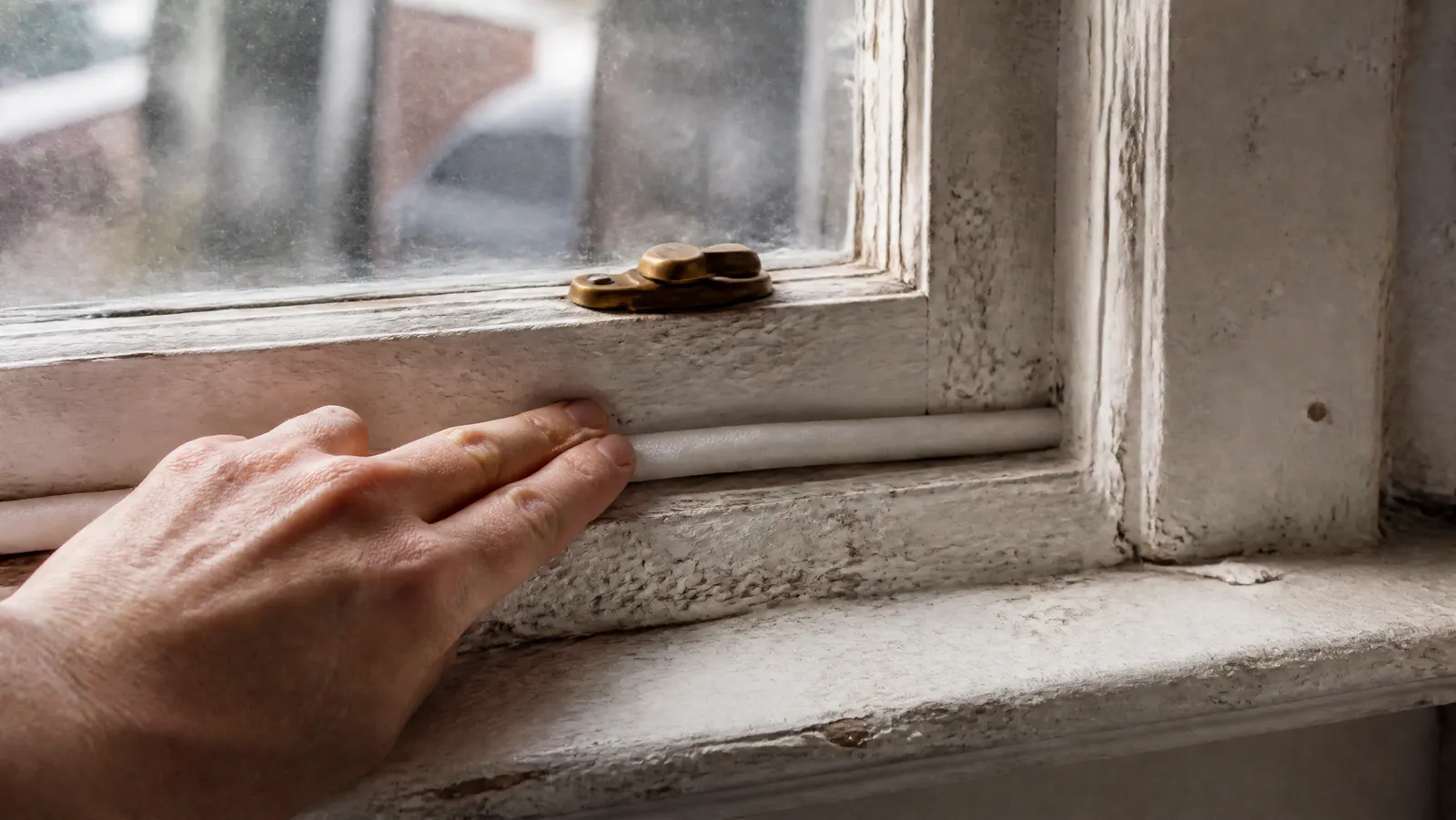
Sound leaks through air gaps before it ever bothers to travel through a solid panel. If the perimeter and bottom of your door aren't sealed, the best acoustic panel in the world won't help. Do that first:
- Seal the top and sides with the 5-step door method.
- Close the bottom with the right under-door sweep.
With the gaps closed, treating the door surface finally pays off.
To block sound: add mass
The only product here that genuinely blocks is one with mass-loaded vinyl (MLV). The Audimute isolé combines an absorptive face with an MLV core (rated STC 20), so it both deadens echo and cuts transmission through the door. A heavy sound dampening blanket hung over the door is the dirt-cheap alternative, but set expectations: it mostly absorbs and adds only a little mass, so it softens noise more than it blocks it. Thin hollow-core doors benefit most from added mass, because there's so little there to begin with.
To tame echo and reflections: add absorption
Once the door is sealed and weighted, absorption cleans up the sound inside your room — especially useful in a bare-walled entryway where everything rings. Your options, best to easiest:
- ATS Acoustics panels — a mineral-wool, wood-framed panel rated NRC 1.0, the gold standard for absorption per panel.
- Audimute absorption sheet — absorbs ~85% of the sound that hits it and hangs over the whole door on grommets.
- Kuchoow self-adhesive hexagons — the cheapest, fastest option: peel, stick, done, and they look intentional.
Skip thin "egg-crate" foam. It's the least effective material per dollar and contributes almost nothing to blocking.
How to treat the door itself
- Seal first (see above) — non-negotiable.
- Hang mass over the door: an MLV panel (or, for far less mass, a heavy blanket) on grommets, ideally covering the full panel edge to edge.
- Add absorption to the door face and the nearest wall to cut reflections.
- Keep the door operable — use a tension rod or removable hooks so a hung blanket or sheet can be pushed aside, rather than gluing something across a door you need to open.
The bigger picture
A door is just one surface. If noise is also coming through windows, walls, or the ceiling, treat those too: heavy curtains for windows, the wall tactics in our noisy neighbors guide, and a white noise machine or earplugs to mask whatever remains.
FAQ
Does acoustic foam soundproof a door?
No. Foam and most acoustic panels absorb sound (reducing echo) but do almost nothing to block sound passing through the door. To block, you need added mass (like mass-loaded vinyl) plus sealed gaps.
What's the difference between NRC and STC?
NRC (Noise Reduction Coefficient) measures how well a material absorbs sound — higher is better for echo. STC (Sound Transmission Class) measures how well it blocks sound passing through — higher is better for stopping noise reaching the other side. For a quiet door you want both.
What actually blocks sound through a door?
Mass and an airtight seal. Seal the perimeter and bottom gaps, then add a dense layer of mass-loaded vinyl — the one material here that adds real blocking mass. A solid-core door blocks far more than a hollow-core one.
Can I do this without damaging the door?
Yes. Hang sheets and blankets on a tension rod or removable hooks, and use peel-and-stick panels that remove cleanly. None of it requires permanent changes, so it's renter-friendly.

A lab-tested sheet that absorbs an average of 85% of the sound that hits it, with grommets so you can hang the whole thing over a door or wall. Eight feet by four feet.
Hung it over the door on a tension rod. The room is dramatically less echoey and the hallway chatter is softer.
*Price shown on Amazon and subject to change.
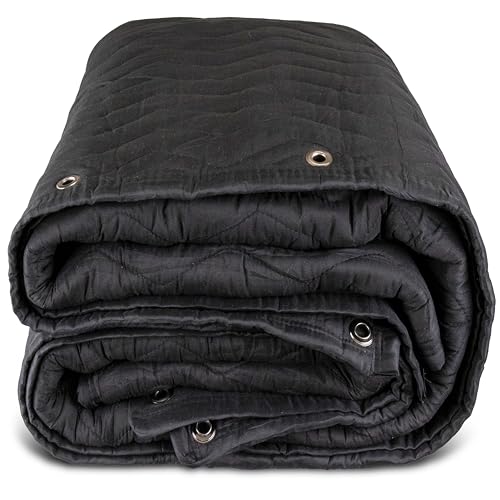
A heavy, washable moving-style blanket (NRC 0.35) with 18 grommets for easy hanging. The big, cheap way to cover a door or doorway with absorption — it kills echo and softens noise, though it adds only a little blocking mass.
It's huge and heavy. Hung over the door it kills echo and takes the edge off noise, and it doubles as a room divider.
*Price shown on Amazon and subject to change.

This is the one that actually blocks. It pairs an absorptive face with a layer of mass-loaded vinyl (STC 20), so it both deadens echo and stops sound transmitting through the door.
The MLV layer makes a real difference that foam never did. Voices through the door are clearly muffled now, not just echoey.
*Price shown on Amazon and subject to change.
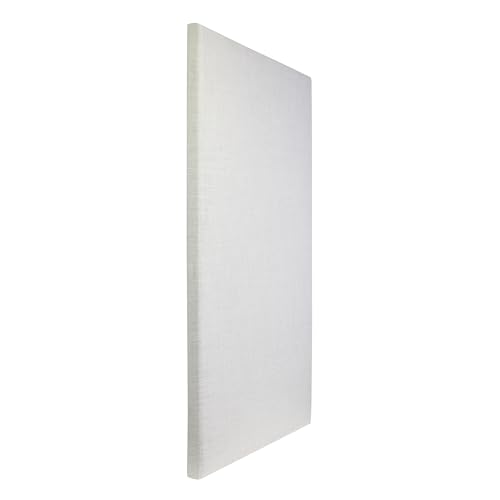
A pro-grade panel with a mineral-wool core and wood frame, rated NRC 1.0 (the maximum). If you want the best absorption per panel, this is it. Made in the USA.
Built like a real studio panel, not a foam square. One on the door and one on the adjacent wall transformed how the entry sounds.
*Price shown on Amazon and subject to change.

Peel-and-stick polyester hexagons that absorb mid and high frequencies and go up in minutes with no tools. The cheapest, tidiest way to treat a door face.
Stuck them straight onto the door in a honeycomb pattern. Looks intentional and the sharp echo in the hallway is noticeably softer.
*Price shown on Amazon and subject to change.
| Pick | Product | Link | |
|---|---|---|---|
| Best Absorption Sheet | Audimute — Audimute Sound Absorption Sheet (96 x 48 in) | $93.00 | Check → |
| Best Sound Blanket | US Cargo Control — US Cargo Control Sound Dampening Blanket (96 x 80 in) | $76.48 | Check → |
| Best 2-in-1 Barrier | Audimute — Audimute isolé Sound Barrier + Absorber (MLV, STC 20) | $149.00 | Check → |
| Best Performance | ATS Acoustics — ATS Acoustics Panel 24 x 48 x 2 in (NRC 1.0) | $79.95 | Check → |
| Best Easy Install | Kuchoow — Kuchoow Hexagon Self-Adhesive Acoustic Panels, 12-Pack | $26.99 | Check → |

Lillie Metayer
Lillie Metayer is the founder of a local program that helps apartment-dwellers take action against noise pollution. Involved in environmental activism since high school, Lillie is passionate about raising awareness of the harms of noise exposure and helping people reduce noise in their communities. In her free time, Lillie enjoys playing the violin and spending time outdoors.