The cheapest way to soundproof a wall that actually works isn't a box of foam — it's sealing the air leaks and adding soft mass. Seal the gaps around your outlets and baseboards first, then hang or stack something dense against the shared wall. Those two moves beat almost any product with "soundproof" printed on the box, dollar for dollar, and most of them cost under $35.
Let's be honest about what "cheap" can and can't buy you. As a renter, you can meaningfully cut echo and shave a little off what crosses the wall, but you are not going to build a recording studio for $30. If you want the complete picture, we cover every renter-safe option in our guide to soundproofing your apartment walls. This piece is the budget shortlist: the moves ranked by payoff-per-dollar, starting with the one nobody markets because there's no branded product to sell you.
How We Ranked These
We ranked these by a single question: how much quiet do you get per dollar? Not how "soundproof" the label sounds.
That means being clear about the two very different jobs sound treatment can do, because they get confused constantly. Absorbing means soaking up echo and reverb inside your own room — the harshness you hear when a space is bare and hard. Blocking means stopping sound from crossing the wall into or out of your neighbor's place. They are measured on completely separate scales. According to New York Soundproofing, STC (Sound Transmission Class) rates how well a barrier blocks sound traveling between spaces, while NRC (Noise Reduction Coefficient) rates how much sound a surface absorbs within a room. A product can score brilliantly on one and do nothing for the other.
Here's why the cheap winners actually win. Blocking sound is governed by the mass law. According to Aural Exchange, a barrier's sound transmission loss rises by only about 6 dB every time you double its mass per unit area — so real blocking demands serious, expensive weight. But a wall is also only as good as its leaks, and sealing those is nearly free. According to Soundproof Spaces, even a 1% air gap can leak up to 30% of the sound, and it can drag a wall's best-case transmission loss down to around 20 dB no matter how dense the wall itself is. That math is the whole reason sealing beats buying almost every time.
1. Seal the Air Leaks First (Under $35)
This is the highest return anywhere in soundproofing, and it barely costs anything.
Your shared wall is full of hidden holes, and the worst offenders are the electrical boxes. According to the Soundproofing Company, a recessed outlet is essentially a hole in the drywall, and a pair of them back-to-back on either side of a partition can measure as low as STC-19 — dramatically worse than the wall around them. Sound pours straight through those gaps while you stare at the drywall wondering why it isn't working.
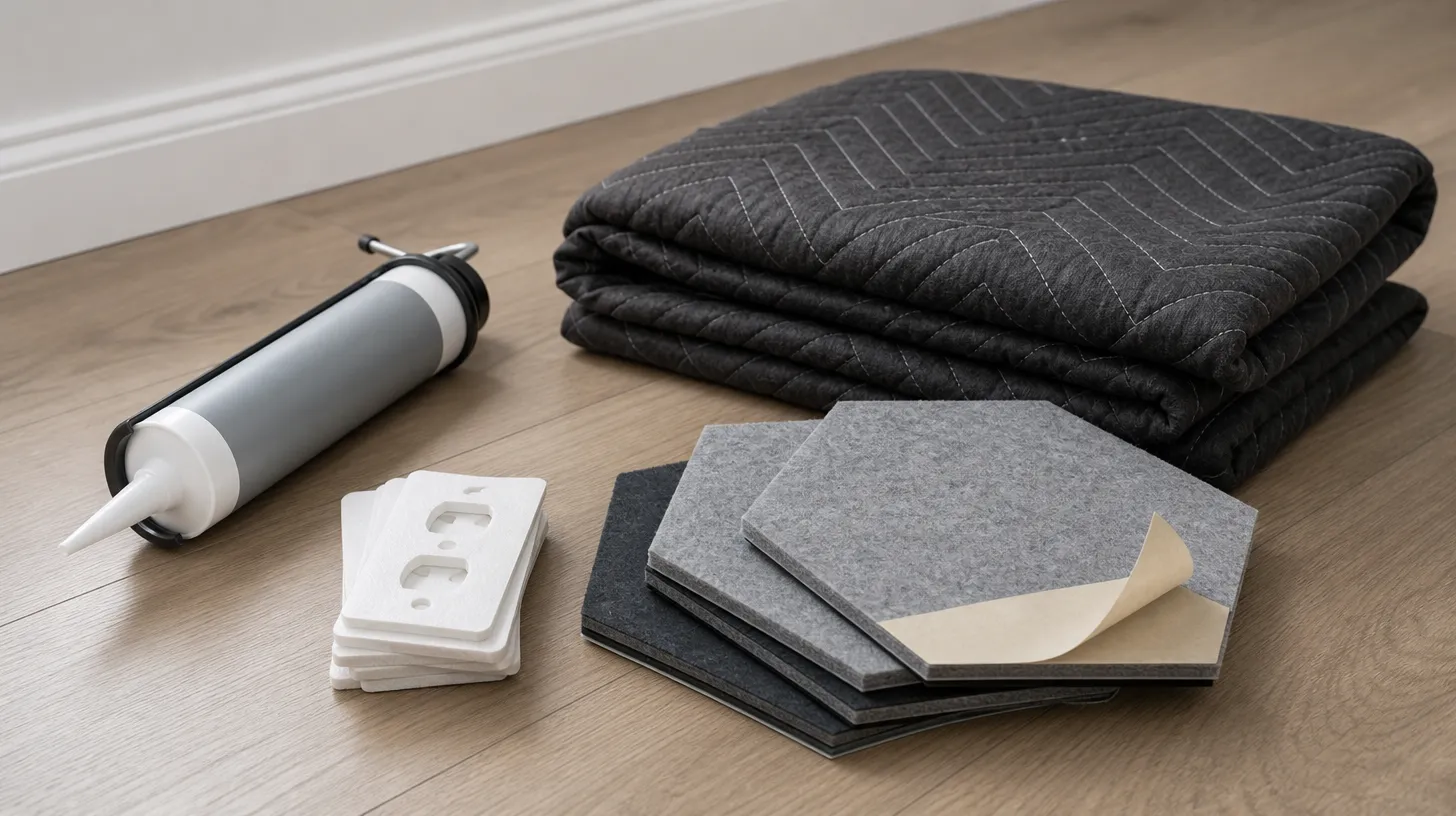
The cheapest fix is a foam gasket behind the cover plate. The Wakhow Outlet Insulation Gaskets come 30 to a pack for about $8 (as of July 2026), and installing one is a two-minute job with a screwdriver: kill the breaker, unscrew the plate, drop the pre-cut gasket over the outlet, screw the plate back on. It seals the air path around the box. According to Trademark Soundproofing, adding a molded seal to an outlet box can improve its STC by around 7 dB — a real, measurable blocking gain for pocket change.
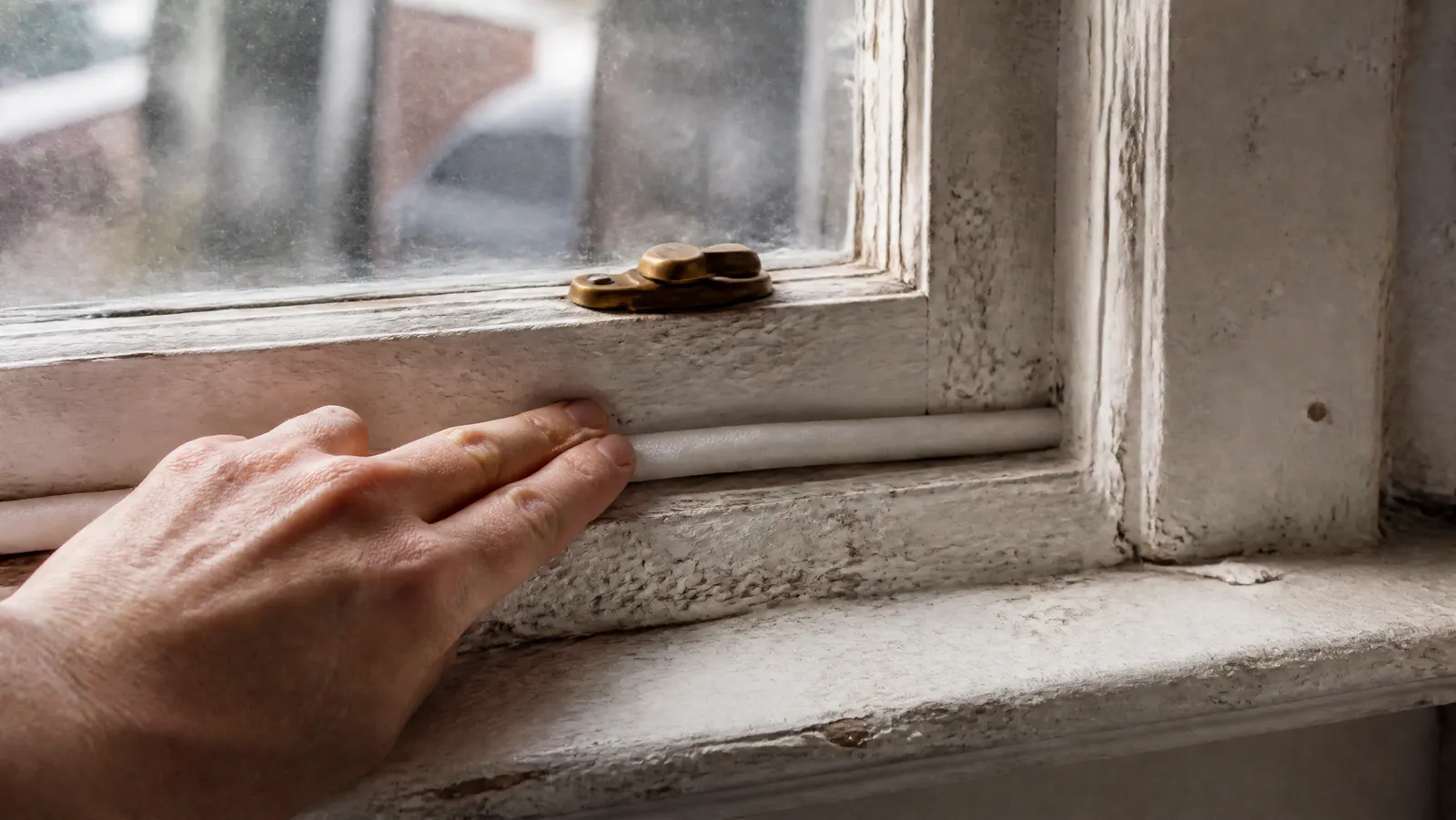
Next, seal the seams a gasket can't reach. The TMS Acoustical Soundproofing Caulk runs about $23 (as of July 2026), and a single 29 oz tube covers roughly 60 linear feet — enough for the baseboard gap along a shared wall, the seam where the wall meets the ceiling, and the edges of a shared-wall doorframe. Acoustic caulk stays permanently flexible, so unlike ordinary painter's caulk it won't crack and quietly reopen the leak a year later.
Here's the part renters care about: these are the rare blocking moves that are also deposit-safe. The gaskets pop right back out. And if you lay a removable bead of caulk — or run painter's tape along the edge first — you can peel the seal at move-out. We walk through exactly how to do all of this reversibly in our guide to soundproof your walls without damage. Seal first, always. It's the only cheap thing on this list that genuinely reduces transmission through the wall.
2. A Packed Bookshelf Against the Shared Wall (Free)
You already own the second-best budget blocker: your stuff.
A tall bookshelf pushed flat against the shared wall and packed tight with books adds real mass exactly where you need it. Remember the mass law — blocking is about weight, and a wall of densely packed hardcovers and paperbacks is genuinely heavy. It is nowhere near a proper barrier, but it's free, and it's adding the one thing that actually matters for transmission. The books' uneven spines also scatter and absorb some of the sound bouncing around on your side, so the shelf pulls double duty: a little blocking and a little absorption at once.
This is the whole appeal of the furniture-and-bookshelf method — rearranging what you already own so the heaviest things sit against the noisy wall. A wardrobe, a stuffed closet, a solid dresser, a loaded shelving unit: anything dense on the shared wall helps, and moving it costs nothing but an afternoon. Put your softest, heaviest possessions between you and the neighbor, and keep the hard, echoey stuff on the far side of the room. It won't silence a party, but it is the best free upgrade you'll find.
3. Soft Mass: Blankets and Curtains ($30–$40)
When you want to cover a big bare wall and can't stack furniture across it, hang soft mass instead.
The VEVOR Sound Dampening Blanket is a 96-by-80-inch grommeted polyester blanket you can hang from a rod or a few hooks for about $31 (as of July 2026). Be clear about what it does: it adds a thin layer of absorption and a token bit of mass. It is not a sound blocker, and to VEVOR's credit, the maker says so — its own listing states the soundproofing effect is limited and that it "only serves as a barrier." Believe them. A single polyester blanket weighs almost nothing, and the mass law says nothing-weight blocks nothing. What it will do is soften a hard, echoey wall and cut the boominess in a bare room, which is a fine thing to buy for thirty dollars as long as you buy it for the right reason.
Heavy curtains are the same idea with better looks. The trick most people miss: hang them on the wall, not just across the window. A wide, floor-to-ceiling run of dense curtain over the shared wall absorbs far more than a narrow panel framing the glass. Layered, heavy fabric is cheap soft mass, and it reads as intentional decor instead of a moving blanket thumbtacked to the drywall. Just keep your expectations honest — this is echo control with a whisper of added mass, not a wall upgrade.
4. Peel-and-Stick Tiles for Echo (Under $30)
If your real complaint is that your room sounds harsh, hollow, or echoey — not that you can hear the neighbor — targeted absorption is the fix.
The Kuchoow Hexagon Self-Adhesive Acoustic Tiles come 12 to a pack for about $29 (as of July 2026), peel and stick up in minutes without tools, and come off without wrecking paint — which is exactly what you want as a renter. At 0.4 inches thick they tame mid-to-high echo: voices, keyboard clatter, the brightness that makes a bare room ring. They're perfect behind a desk, in a video-call corner, or on the wall that makes your own TV sound sharp and fatiguing.
But this is the single most misunderstood product category in the whole space, so let's be blunt. Foam-style tiles absorb echo inside your room. They do not block sound crossing the wall. They are light and porous, so air — and sound with it — passes right through, adding essentially nothing to the mass or the seal that blocking actually requires. We spell out the physics in detail in our piece on whether acoustic foam blocks sound. Buy these tiles to make your own room sound better on a call or a recording. Do not buy them expecting a quieter neighbor, because that is simply not the job they can do.
5. Rugs and Soft Furnishings (Whatever You Own)
A thick rug is the most underrated cheap fix on this list, and if you already own one, it's free.
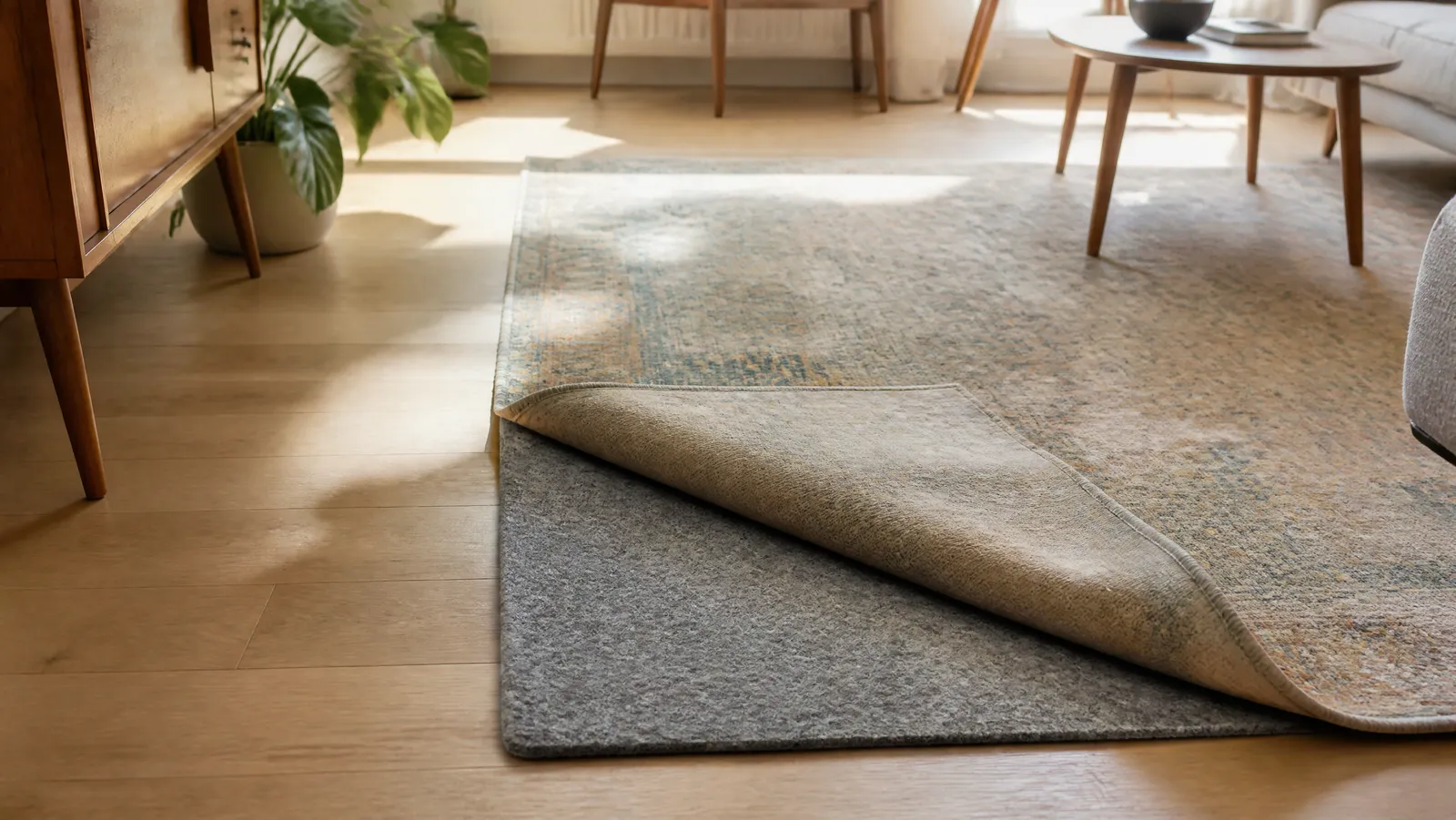
A dense rug does two useful things at once. Inside your room, its surface absorbs echo the same way panels do — a bare hard floor is often the loudest reflective surface in an apartment. And downstairs, it cuts the impact noise you send through the floor: footsteps, dropped keys, chair scrapes. That is structure-borne sound, a different animal from airborne noise through a wall, and soft, dense material is exactly the right tool for it. According to Kapetto, a dense-cut, high-pile rug in the 10-to-18-millimeter range delivers the best acoustic results, with thick natural fibers like wool trapping sound energy most effectively.
Add a felt rug pad underneath and it gets better still. According to Acousart, a thick felt pad can cut impact noise by roughly 20 to 40 percent by absorbing the vibration before it reaches the subfloor. If you're the neighbor being complained about, a rug plus a dense pad is one of the kindest and cheapest things you can do — and it makes your own space sound warmer at the same time. Pile on the rest of the soft furnishings, too: a stuffed sofa, floor cushions, a full bookshelf, a padded headboard. Every soft, dense object in the room is quietly doing acoustic work you didn't pay extra for.
Where NOT to Spend Your Money
Two popular "cheap soundproofing" buys are where budgets go to die.
Thin egg-crate foam wedges. The bags of 1-inch pyramid or wedge foam sold as "soundproofing" are the classic trap. They are too thin to absorb much even at the one job foam can do — echo — and they block precisely nothing crossing the wall. If you want absorption, the peel-and-stick tiles above (or a proper mineral-wool panel) do far more per dollar. If you want blocking, foam is simply the wrong physics no matter how much of it you glue up. Skip the egg-crate entirely.
Treating soundproof paint as a cure. Acoustic paint gets marketed as a magic blocker, and it is not one. According to Acoustical Solutions, a typical acoustic paint reduces sound transmission through a wall by only about 2 to 4 decibels per coat, and there is no paint thick enough to actually block sound. It can take a slight edge off faint mid-range background noise across several coats, but against a loud TV or a genuinely disruptive neighbor it won't make a difference you can perceive. Don't budget for it as a solution — put that money into sealing and mass instead.
The Cheapest Order of Operations
So here's the honest budget playbook, in order. Seal first — the outlet gaskets and acoustic caulk are the only genuinely cheap moves that reduce what crosses the wall, and they're deposit-safe. Add soft mass next — a packed bookshelf, heavy curtains, or a hung blanket against the shared wall. Then treat echo — peel-and-stick tiles and a dense rug to make your own room sound calm.
None of this turns a rental into a vault, and anyone who tells you a $30 product will is selling you the label, not the physics. But sealing plus soft mass, done in that order, gets you most of the realistically achievable quiet for well under a hundred dollars. When you're ready to go further — dense barrier products, decoupling tricks, and which upgrades are actually worth the money — work through our full renter's guide to quieting apartment walls. Seal, then add soft mass, then treat echo. That's the cheapest way to soundproof a wall that still works.
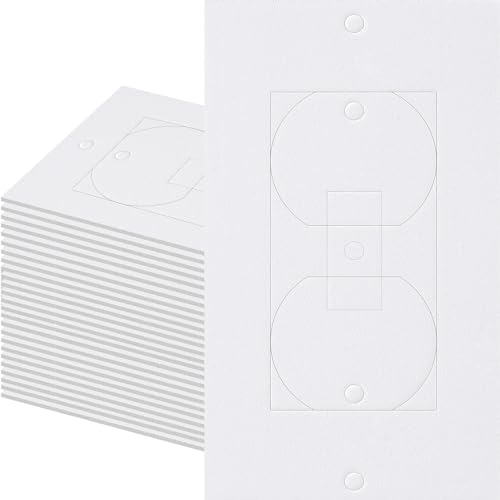
Pre-cut EVA foam gaskets that sit behind outlet and switch plates on the shared wall. Electrical boxes are one of the biggest hidden air leaks in a wall, and sealing them is the highest return per dollar in the whole guide.
Under ten dollars, five minutes with a screwdriver, zero damage. This is the first thing to buy, not the last.
*Price shown on Amazon and subject to change.

A latex-based acoustic sealant for the cracks a paint gun can't fill: baseboard gaps, the seam where wall meets ceiling, and around a shared-wall doorframe. One 29 oz tube covers roughly 60 linear feet.
Not glamorous, but sealing air paths is the one blocking-side move that's cheap and physically sound. Use a removable bead where you need your deposit back.
*Price shown on Amazon and subject to change.

A big grommeted polyester blanket you can hang on the shared wall from a rod or hooks for a thin layer of absorption and a little mass. The maker is candid that its soundproofing effect is limited and it 'only serves as a barrier' — treat it as cheap echo control, not a wall.
For about thirty dollars it softens a bare, echoey wall and adds a token bit of mass. Just don't expect it to hush a loud neighbor.
*Price shown on Amazon and subject to change.
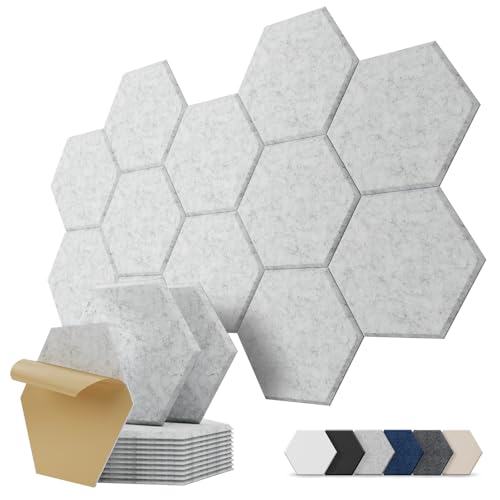
Twelve peel-and-stick hexagon tiles that go up in minutes without tools and come off without wrecking paint. At 0.4 inches thick they tame mid-to-high echo — voices, clatter, brightness — not bass.
The lowest-commitment way to cut echo in a corner or behind a desk. A targeted echo fix, not a way to block transmission.
*Price shown on Amazon and subject to change.
| Pick | Product | Link | |
|---|---|---|---|
| Cheapest High-Value Fix | Wakhow — Wakhow Outlet Insulation Gaskets (30-Pack, EVA Foam) | $7.99 | Check → |
| Best for Sealing Gaps | Trademark Soundproofing — TMS Acoustical Soundproofing Caulk (1 Tube, 29 oz) | $22.97 | Check → |
| Cheapest Soft Mass | VEVOR — VEVOR Sound Dampening Blanket, 96" x 80" (Grommeted) | $31.15 | Check → |
| Cheapest Peel-and-Stick Echo Control | Kuchoow — Kuchoow Hexagon Self-Adhesive Acoustic Tiles (12-Pack) | $28.99 | Check → |

Lillie Metayer
Lillie Metayer is the founder of a local program that helps apartment-dwellers take action against noise pollution. Involved in environmental activism since high school, Lillie is passionate about raising awareness of the harms of noise exposure and helping people reduce noise in their communities. In her free time, Lillie enjoys playing the violin and spending time outdoors.